editorials·AI-REDIGERAD
Baseball’s Dominican Pipeline Under Fire for Legal Evasion and Exploitation
Investigations into the Dominican Republic’s baseball pipeline reveal a system where "fixers" and predatory financial practices allegedly protect stars and exploit young prospects.
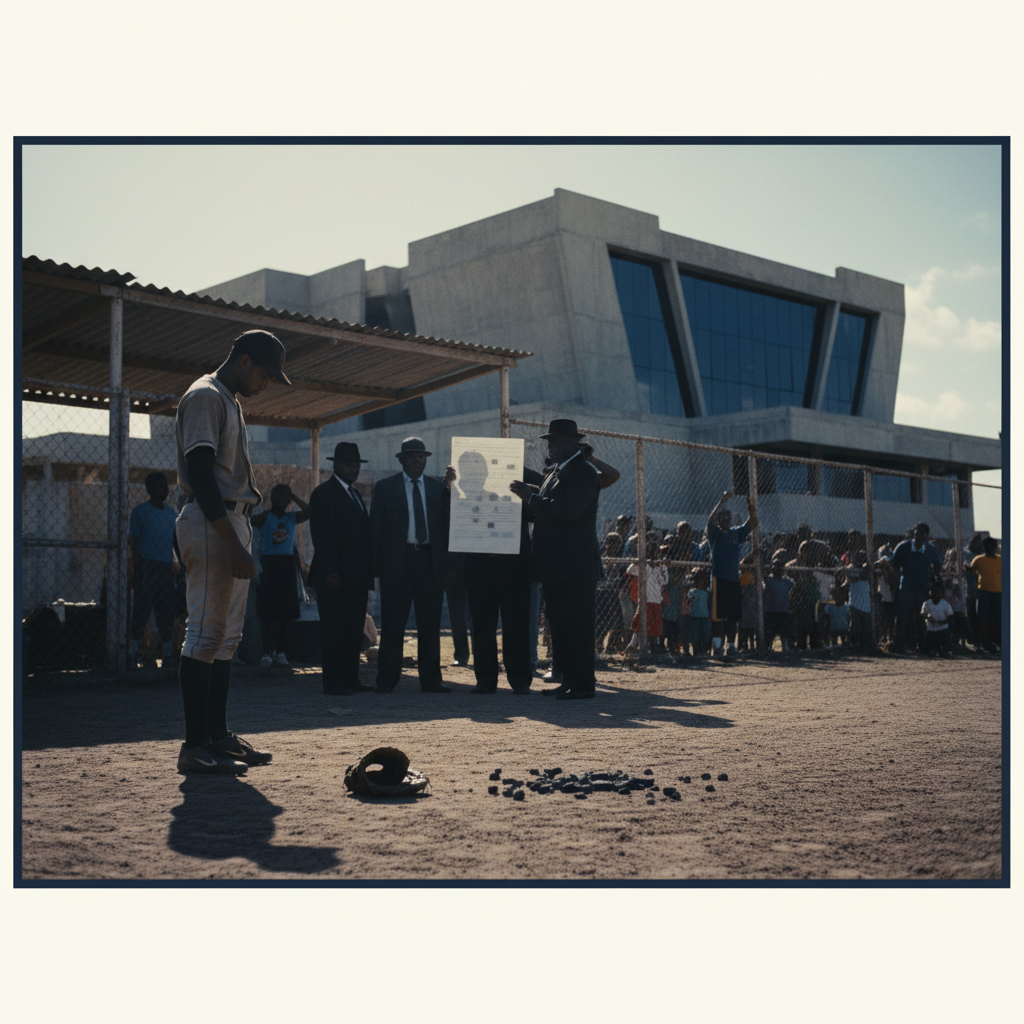
The Dominican Republic has long served as the primary pipeline for international talent entering Major League Baseball (MLB), yet the mechanisms governing this "baseball factory" have come under intense scrutiny. Recent investigations have highlighted a system where legal accountability and the protection of young athletes are often secondary to financial interests and professional preservation. These reports suggest that the combination of immense wealth and systemic gaps in the Dominican legal and sporting frameworks allows powerful actors to navigate around rules that would otherwise lead to criminal prosecution or career-ending scandals.
In a detailed investigation into a 2020 fatal car accident, ProPublica argues that current MLB star Oneil Cruz was able to avoid significant legal consequences through the intervention of a "fixer" named Santo Caraballo. The outlet reports that although three people were killed when Cruz’s vehicle struck a motorcycle, the legal case was effectively dismantled by leveraging a specific quirk of Dominican law that allows victims' families to withdraw criminal charges. ProPublica claims that Caraballo secured these withdrawals through cash payments totaling roughly $66,000, suggesting that the victims' families felt pressured to accept the money in exchange for silence. The investigation contends that this incident not only saved Cruz’s career but solidified Caraballo's status as a formidable operative within the baseball ecosystem.
Broadening the scope of the critique, ProPublica also warns that the entire Dominican baseball infrastructure is built upon a predatory system that exploits child athletes. The report asserts that MLB teams frequently bypass signing rules by entering into "handshake deals" with prospects as young as 12 or 14 years old. This practice, according to the outlet, creates a vacuum where trainers and moneylenders can claim the majority of a player's future bonus through high-interest loans and steep commissions. ProPublica further suggests that MLB has failed to adequately penalize teams for these violations, while high-profile figures in the sport have resisted reforms due to their own undisclosed financial interests.
These editorials collectively paint a picture of a sporting industry that prioritizes talent acquisition over ethical standards and judicial integrity. While the specific accounts of Oneil Cruz and young prospects like Belfi Rivera highlight different aspects of the system—one focused on legal evasion and the other on financial exploitation—both narratives converge on the idea that the "baseball factory" operates with a degree of impunity that leaves vulnerable families at a disadvantage.
Detta vet vi
- A fixer allegedly used cash payouts to halt a fatal crash investigation involving Oneil Cruz.
- Dominican law allows families to drop criminal charges, a loophole reportedly used by wealthy athletes.
- MLB teams reportedly use illegal 'handshake deals' to secure child athletes as young as 12.
- Predatory lenders and trainers often siphon away the majority of young players' signing bonuses.
Påståenden & källor