editorials·AI-REDIGERAD
Competing Visions to Save the Vanishing Waterways of the American West
As Western rivers face collapse, editorials are debating whether to spend billions on experimental technology or dismantle century-old laws that protect wasteful usage.
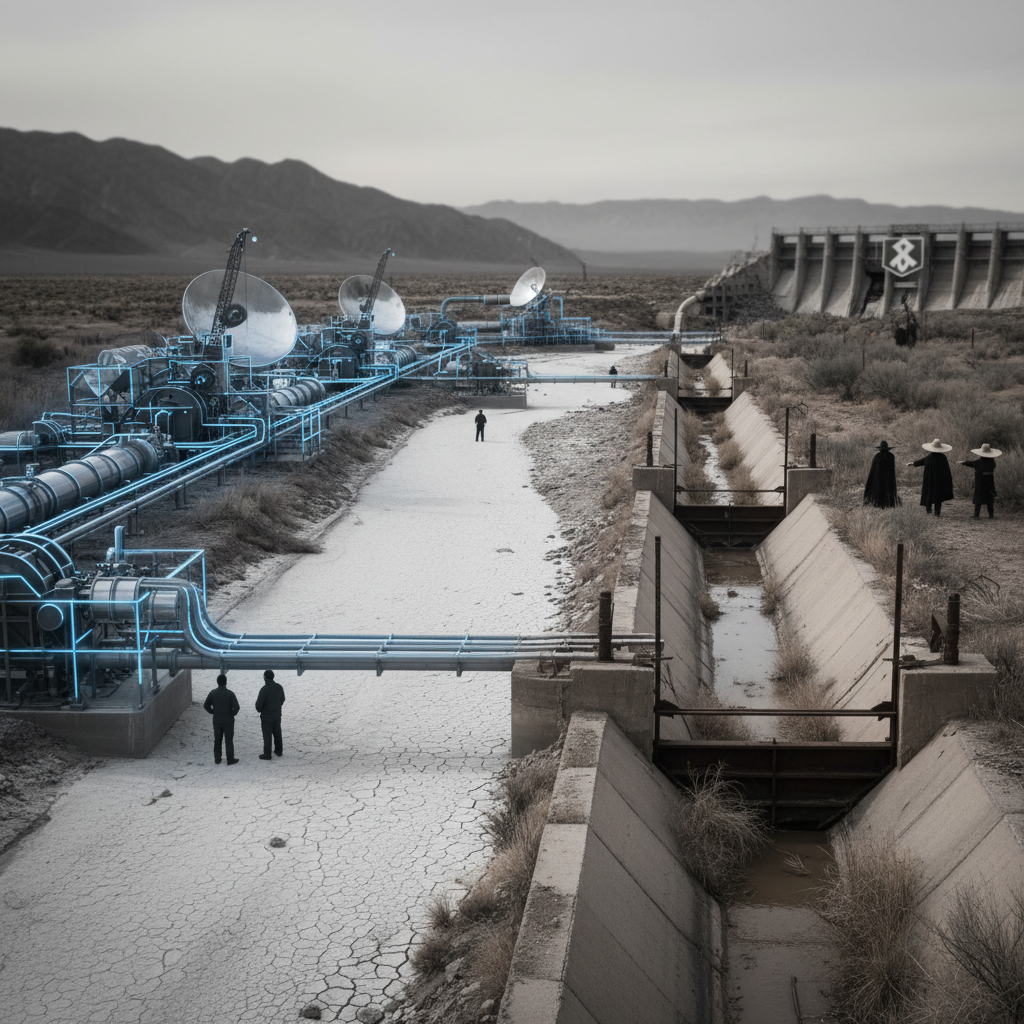
The management of the American West’s most vital waterways has reached a breaking point, as historical legal frameworks collide with the modern reality of chronic drought. In recent years, the conversation has shifted from conservation efforts to a search for structural and technological overhauls. Major editorial boards are now weighing the merits of expensive, "all-of-the-above" infrastructure projects against the potential for sweeping legal reforms that would challenge long-held property rights and historical water claims.
Mother Jones explores how a bitter stalemate among the seven states bordering the Colorado River has pushed the federal government toward a "wish list" of high-tech fixes. As traditional negotiations over consumption cuts stall, the piece observes a pivot toward massive spending on desalination plants, groundwater extraction in the Mojave Desert, and cloud seeding to boost snowpack levels. Mother Jones warns that while these $50 billion proposals may bypass political gridlock, they represent an expensive and potentially risky gamble compared to the necessary but difficult task of simply reducing water demand.
Focusing on the Pacific Northwest, ProPublica argues that inflexible state laws and antiquated infrastructure are the primary drivers of the crisis on the Deschutes River. The outlet points to 120-year-old canal systems that lose nearly half their volume to evaporation and seepage before reaching any destination. ProPublica notes that while replacing these canals with pressurized pipes offers a glimmer of hope, the projects face astronomical costs and timelines spanning several decades. Furthermore, political leaders appear hesitant to challenge the historical property rights that allow these inefficiencies to persist.
In a secondary analysis of the same region, ProPublica contends that Oregon's "beneficial use" laws are failing by prioritizing aesthetic greenery over food production. The report highlights a stark disparity where "senior" water rights protect wealthy residential districts and "hobby ranches" while commercial farmers downstream are forced to leave their fields fallow. By focusing on how only 25% of diverted water actually reaches crops in certain districts, ProPublica suggests that the current hierarchy of rights—based on 19th-century claims rather than modern necessity—is systematically failing the region's agricultural backbone.
These perspectives converge on the conclusion that the current status quo in Western water management is unsustainable. While Mother Jones highlights a federal shift toward technological "moonshots" to avoid political friction, ProPublica emphasizes that legal and structural reforms are hindered by a "property rights" culture that protects waste. Ultimately, the debate is split between those seeking to engineer more water and those calling for a legal redistribution of the water that remains.
Detta vet vi
- Mother Jones notes a shift toward expensive tech fixes like desalination due to political gridlock.
- ProPublica reports that Oregon’s aging canals lose up to 50% of water to seepage and evaporation.
- Current laws often prioritize affluent 'hobby farms' over commercial agriculture during droughts, per ProPublica.
- Proposed federal infrastructure lists for the Colorado River could cost over $50 billion.
Påståenden & källor