editorials·AI-REDIGERAD
Constitutional Challenges to State 'Assault Weapon' Bans
As the Supreme Court prepares to hear challenges to state-level "assault weapon" bans, legal observers are debating whether the AR-15 is a protected tool for self-defense or a weapon subject to regulation.
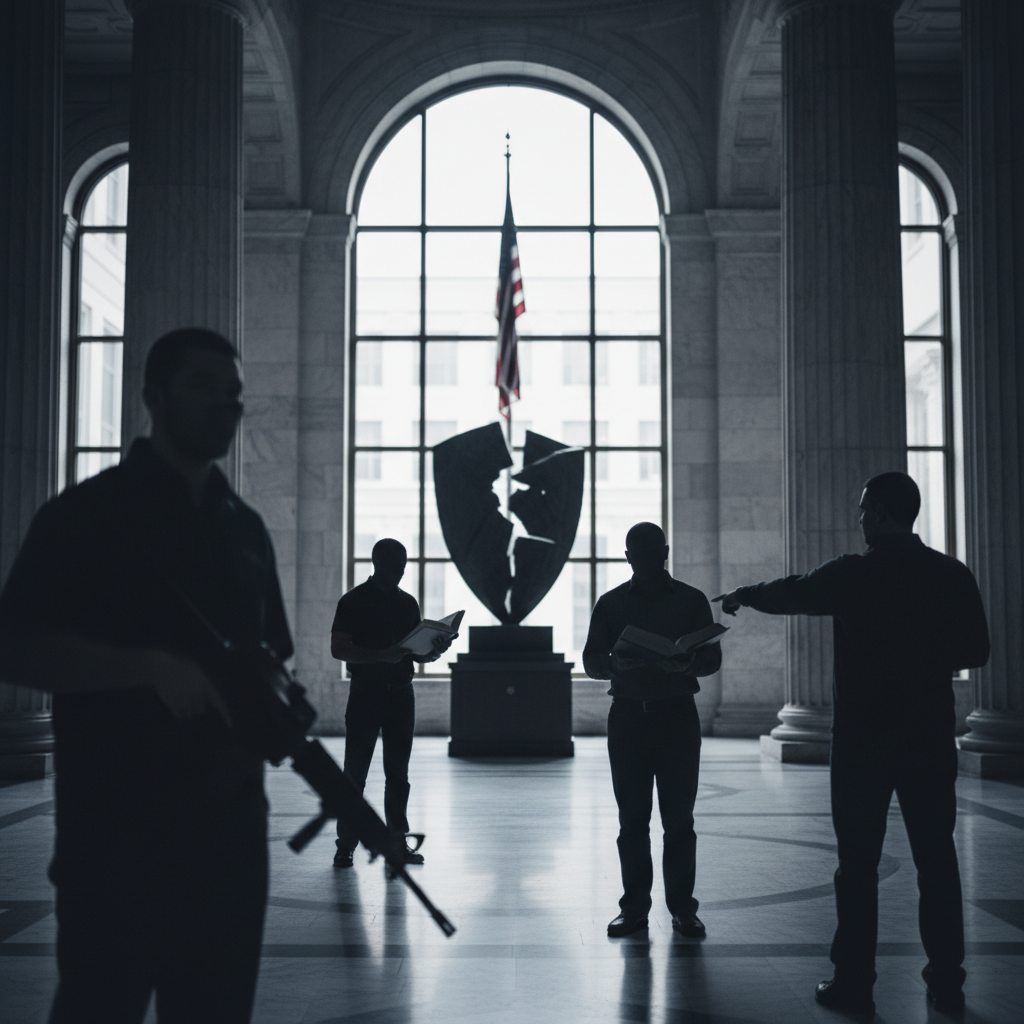
The United States Supreme Court is set to address the constitutionality of state-level "assault weapon" bans, a legal battle that centers on the definition of firearms protected by the Second Amendment. These cases, involving restrictions in Illinois and Connecticut, challenge whether semi-automatic rifles like the AR-15 fall under the category of arms in common use by law-abiding citizens. The judicial outcome will likely hinge on the interpretation of recent precedents and the historical traditions of firearm regulation in America.
Reason highlights that AR-15 platform rifles are the modern-day equivalents of historical arms utilized for hunting and self-defense. The publication notes that these firearms are demonstrably in common use, citing surveys that indicate approximately 26 million Americans own rifles targeted by these legislative bans. Furthermore, the editorial contests the legal reasoning of lower courts that attempt to equate semi-automatic rifles with fully automatic machine guns, arguing that such a classification ignores both the technical mechanics of the weapons and historical legal traditions.
The legal vulnerability of these state bans is further emphasized by Reason, which argues that the restrictions likely violate the Second Amendment's protection of arms in common use. The editorial points to the "Bruen test," a judicial standard requiring that modern gun regulations align with the nation’s historical regulatory traditions. It suggests that local governments will struggle to find sufficient historical analogs for these bans, asserting that old gunpowder storage laws do not provide a valid precedent for prohibiting specific rifle features today. The outlet concludes that with the current conservative-leaning bench, these state-level prohibitions face a difficult path to survival.
The conversation surrounding these cases reflects a fundamental disagreement over whether modern semi-automatic technology qualifies for the same constitutional protections as historical muskets or revolvers. While the provided viewpoints converge on the idea that high ownership numbers should grant these rifles constitutional protection, the core of the debate remains whether the Supreme Court will view the AR-15 as a standard tool for self-defense or a uniquely dangerous weapon that falls outside the "common use" tradition.
Detta vet vi
- AR-15s are arguably protected as arms in common use by millions of Americans.
- State bans may fail the 'Bruen test' regarding historical regulatory traditions.
- Critics argue semi-automatic rifles are being unfairly equated with machine guns.
- Historical analogs for modern bans are seen by some as legally insufficient.
Påståenden & källor