editorials·AI-REDIGERAD
Debating the Risk of Federal Intervention at American Polling Places
Legal experts and activists are debating whether federal law can prevent armed agents from patrolling polling places during upcoming elections.
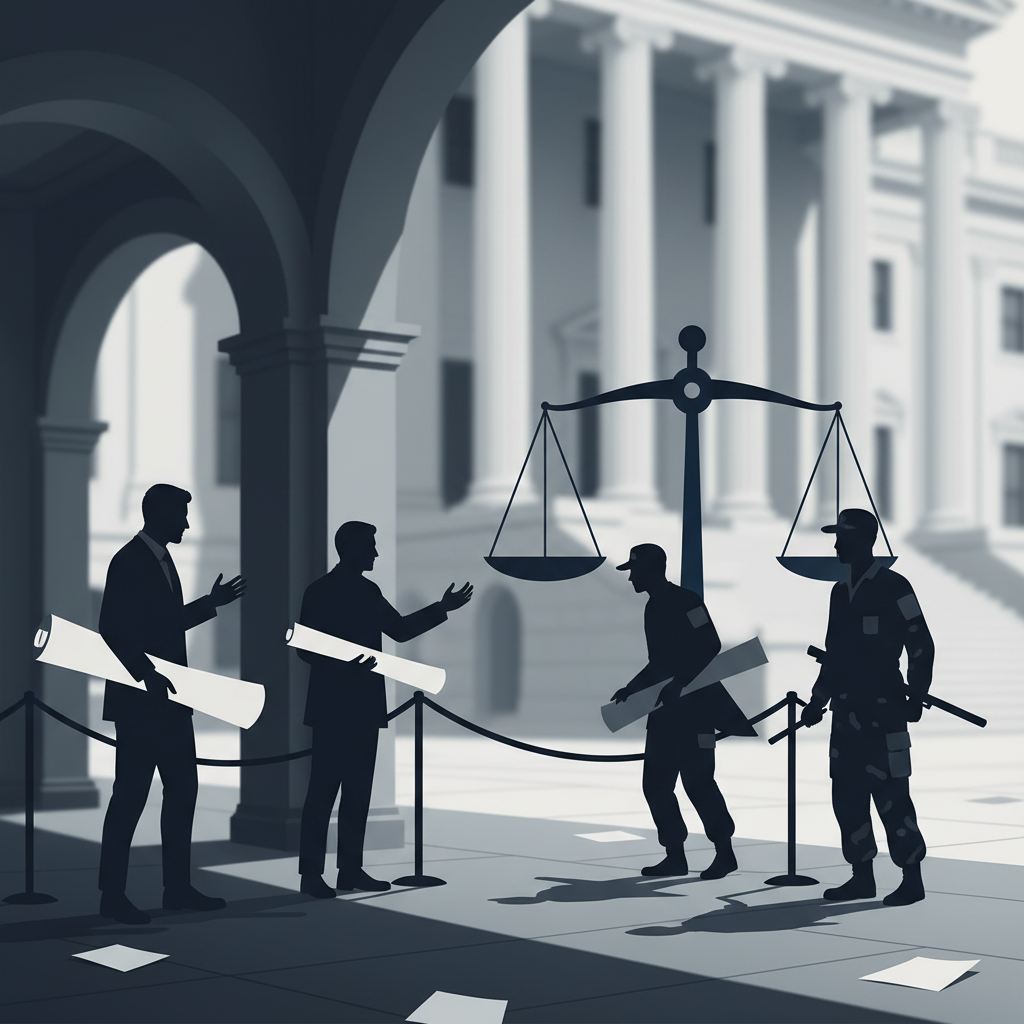
The prospect of federal agents appearing at polling places has ignited a debate over the durability of American democratic institutions and the legality of executive intervention. As the United States approaches a high-stakes election cycle, commentators are weighing the threat of voter intimidation against the statutory protections designed to keep armed personnel away from the ballot box. This conversation focuses on whether the executive branch can—or will—use agencies like Immigration and Customs Enforcement (ICE) to influence voting outcomes in key districts.
Writing for Mother Jones, one perspective argues that a fragmented security landscape leaves the electorate vulnerable to federal overreach. This editorial contends that agencies like ICE have been transformed into paramilitary forces loyal to the executive branch rather than the Constitution. The author warns that because local police and the National Guard are unlikely to risk armed conflict by confronting federal agents, the responsibility for protecting voters falls to civil society. Consequently, the piece highlights that pro-democracy organizations are already training citizens in nonviolent direct action to counter potential intimidation in minority neighborhoods.
Conversely, an analysis featured in Mother Jones cites voting expert David Becker to argue that such a deployment is both legally prohibited and logistically impractical. Becker points to federal statute 18 U.S.C. 592, which explicitly bans armed individuals at polling sites, as a significant legal barrier that would trigger immediate court challenges. Furthermore, he asserts that the rise of mail-in and early voting makes Election Day intimidation ineffective. According to this view, since many Democrats vote early, any attempt to suppress in-person turnout would likely harm Republican voters more than their opponents, rendering the tactic politically self-defeating.
While these viewpoints differ on the likelihood of a crisis, they both reflect a deep-seated anxiety regarding the politicization of federal law enforcement. One side sees an urgent need for grassroots mobilization to fill a security vacuum, while the other maintains that existing laws and shifting voting patterns provide a robust defense against executive interference.
Detta vet vi
- One editorial warns that ICE has become a paramilitary force capable of intimidating minority voters.
- Legal experts argue that 18 U.S.C. 592 strictly prohibits armed personnel at voting sites.
- Activists are training citizens in nonviolent resistance, fearing local police won't stop federal agents.
- Shifts toward mail-in voting may make traditional Election Day intimidation tactics logistically ineffective.
Påståenden & källor