editorials·AI-REDIGERAD
Economic and Legal Debates Over Structural Excess Capacity Tariffs
As the Trump administration seeks to utilize Section 301 to address foreign overproduction, legal and economic critics are questioning the validity of the 'excess capacity' argument.
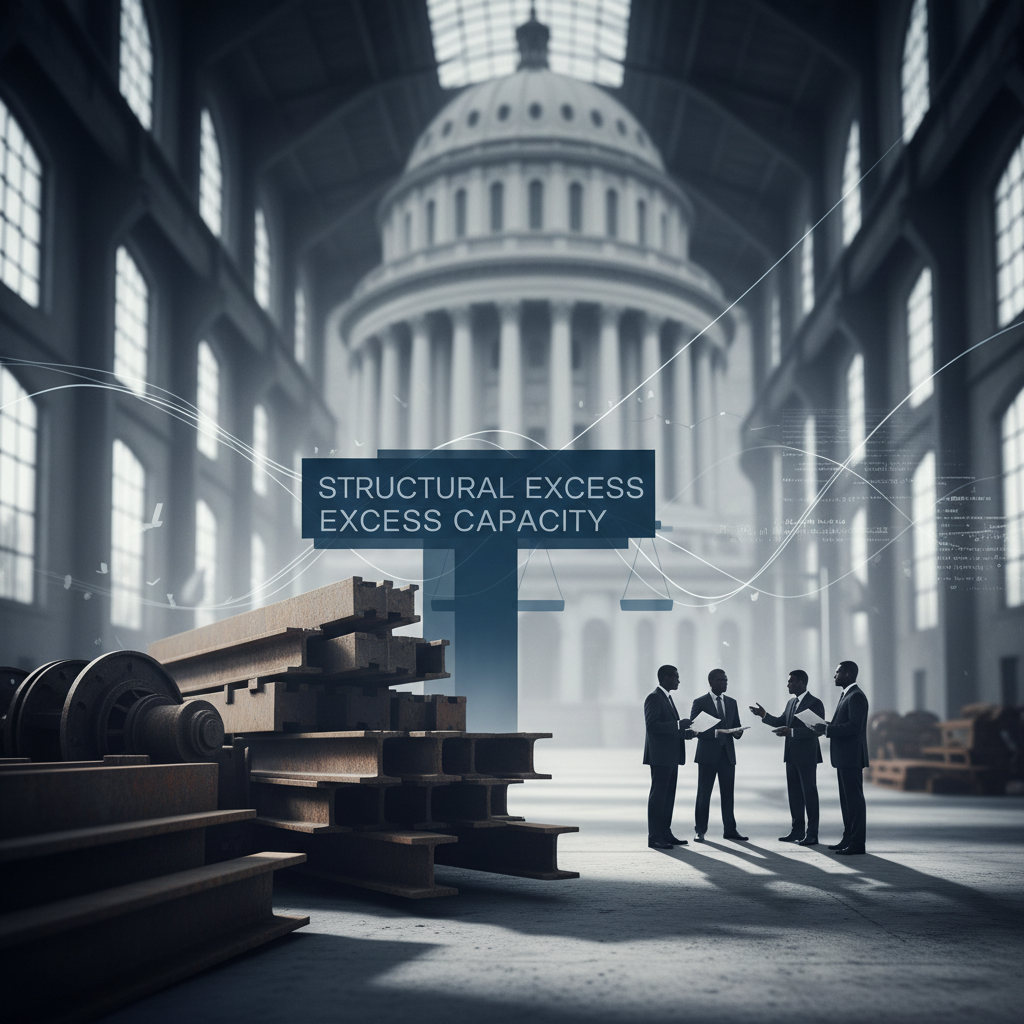
The global trade landscape is currently being reshaped by a debate over "structural excess capacity," a term increasingly used by the Trump administration to justify broad new tariffs. This concept suggests that when foreign nations produce goods in volumes far exceeding their domestic demand, it creates an unfair global glut that suppresses prices and damages American manufacturing. Critics, however, view this as a legal and economic pretext for protectionism, questioning whether the executive branch has the authority to label standard export behavior as a trade violation.
Reason argues that the administration’s focus on excess capacity is a flawed economic premise used to pathologize trade surpluses. The publication points out that producing more than a domestic population can consume is a standard sign of industrial success rather than a conspiracy. Furthermore, the outlet emphasizes that American sectors like aerospace and agriculture rely on this exact same "excess" capacity; if the U.S. condemns others for exporting surplus goods, it risks domestic retaliation against American-made products like Boeing aircraft and cotton.
Turning to the legal framework of these trade actions, Reason warns that the administration is overstepping its constitutional bounds by leveraging Section 301 of the Trade Act of 1974. The editorial suggests that after previous legal setbacks regarding emergency powers, the executive branch is using Section 301 as a "fallback" to impose near-universal tariffs. The authors assert that this statute was intended for specific trade remedies against unreasonable practices, not as a mechanism for broad global taxation, and they argue that such actions should be subject to strict judicial review.
The conversation reveals a sharp divide between the administration’s focus on industrial protection and its critics' devotion to established trade norms. While the government views overcapacity as a threat to national stability, these editorials suggest the strategy represents a misunderstanding of market efficiency and a potentially illegal expansion of executive power. Both perspectives highlight a looming legal battle over whether the President can unilaterally redefine trade fairness to include almost any trade surplus.
Detta vet vi
- Critics argue 'excess capacity' is a standard business practice, not an unfair trade violation.
- U.S. exports like aircraft and cotton rely on the same surplus production being criticized.
- Legal scholars warn that using Section 301 for broad tariffs exceeds executive authority.
- The administration's strategy is seen as a way to bypass previous judicial restrictions.
Påståenden & källor