editorials·AI-REDIGERAD
Escalating European Wildfires and the Political Response
As unprecedented wildfires devastate Europe, editorial boards are debating whether the crisis requires a total overhaul of infrastructure or aggressive economic sanctions against climate-lagging nations.
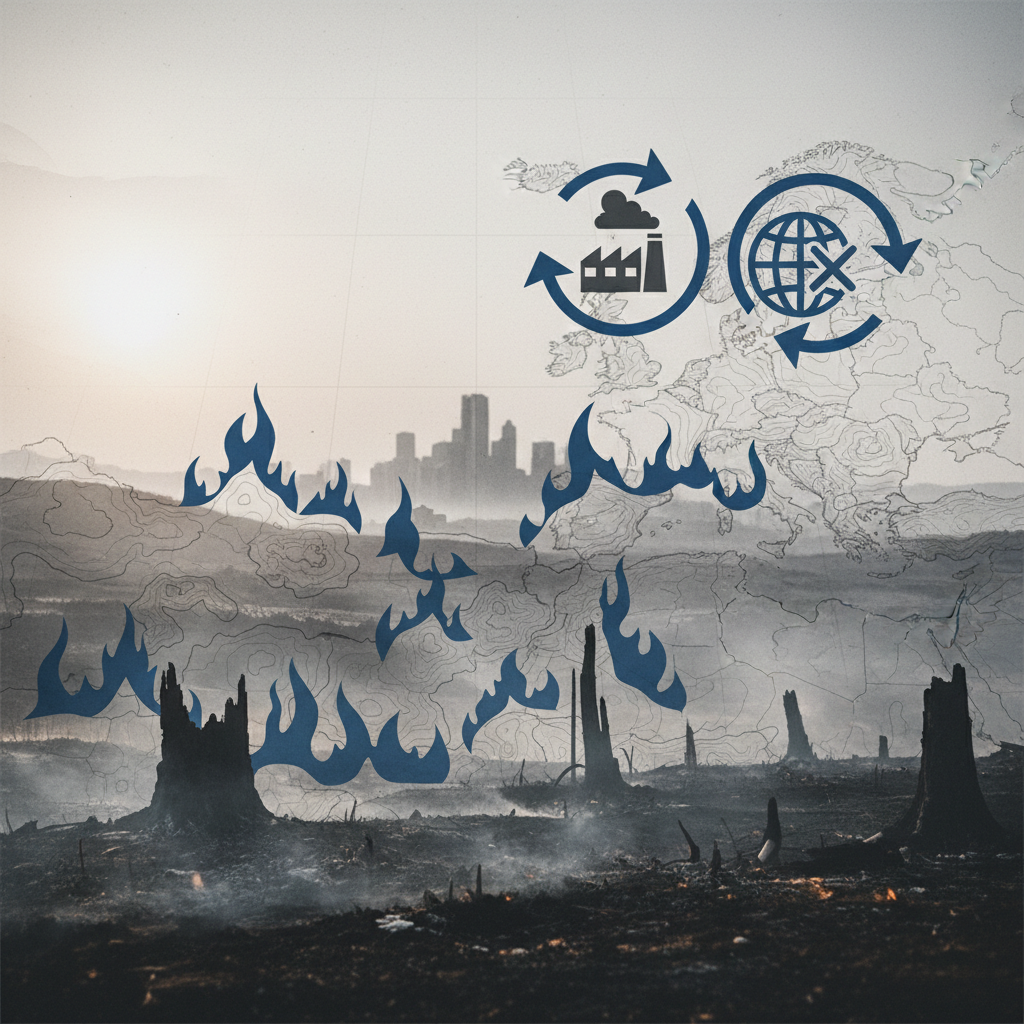
The recent surge of catastrophic wildfires across France, Spain, and the Mediterranean has prompted an urgent debate among editorial boards regarding the inadequacy of current political and economic responses. As record-breaking blazes consume hundreds of thousands of hectares, commentators are highlighting the emergence of novel, terrifying environmental phenomena that challenge existing emergency protocols. The central tension in the global conversation rests on whether the crisis is a manageable disaster or a sign of systemic collapse requiring radical geopolitical and infrastructural shifts.
The Guardian argues that political leaders are failing to prioritize climate action even as the devastation reaches unprecedented levels. The editorial board points to a dangerous gap between the escalating physical evidence of environmental decay and the current political landscape, where climate policies are being deprioritized. Similarly, Bill McGuire writing in The Guardian suggests that both the public and governments have become dangerously desensitized to extreme weather events. He warns that major trading blocs are actively retreating from their previous climate pledges at the exact moment global heating is becoming most undeniable.
The technical severity of these fires is a primary concern for Mother Jones, which notes that France has witnessed its first documented pyrocumulonimbus, or fire clouds. These phenomena create their own weather systems, including lightning and powerful downdrafts, which Mother Jones argues have led to a state of operational impossibility for firefighters. Because these blazes have doubled destruction records from the last two decades, the publication identifies human-caused climate change as the primary driver of these uncontrollable conditions.
Addressing the structural response, Project Syndicate contends that Europe is trapped in a reactive cycle of disaster management. The piece calls for a total overhaul of energy grids and infrastructure, arguing that incremental changes are no longer viable in the face of shifting material conditions. Taking a more aggressive stance, Alexander Hurst in The Guardian recommends that the European Union utilize its market power to impose carbon-related sanctions against nations like the United States if they persist in dismantling climate protections.
While there is a clear consensus that the current wildfire season represents a dangerous new climate reality, the suggested solutions vary in scope. Some boards focus on the immediate need for scientific advocacy and domestic policy realignment, while others argue that only fundamental economic transformations and international trade pressure can address the scale of the impending disaster.
Detta vet vi
- Fire-generated thunderstorms are creating uncontrollable weather systems that exceed current firefighting capabilities.
- European leaders are criticized for reactive emergency planning instead of proactive structural and economic shifts.
- Some commentators advocate for carbon-related trade sanctions to pressure international partners into climate compliance.
- There is deep concern that governments are abandoning climate pledges despite visible environmental collapse.
Påståenden & källor
- T
The Guardian: The Guardian view on Europe’s wildfires: politics must catch up with the new reality | Editorial
- T
The Guardian: Wildfires are raging – and the world has junked 45 climate pledges. Disaster looms, and little wonder | Bill McGuire
- P
Project Syndicate: Europe Is Fiddling While Rome Burns
- T
The Guardian: Europe is burning – and if Trump’s war on the climate is not met with sanctions, things will only get worse | Alexander Hurst
- M
Mother Jones: France Had Never Seen a “Fire Cloud” Until This Month’s Record-Smashing Blazes