editorials·AI-REDIGERAD
Judicial Overrides of Local School Board Decisions in History
Historical retrospectives on pivotal school district cases illustrate the ongoing tension between local governance and federal judicial supremacy regarding civil rights and religious expression.
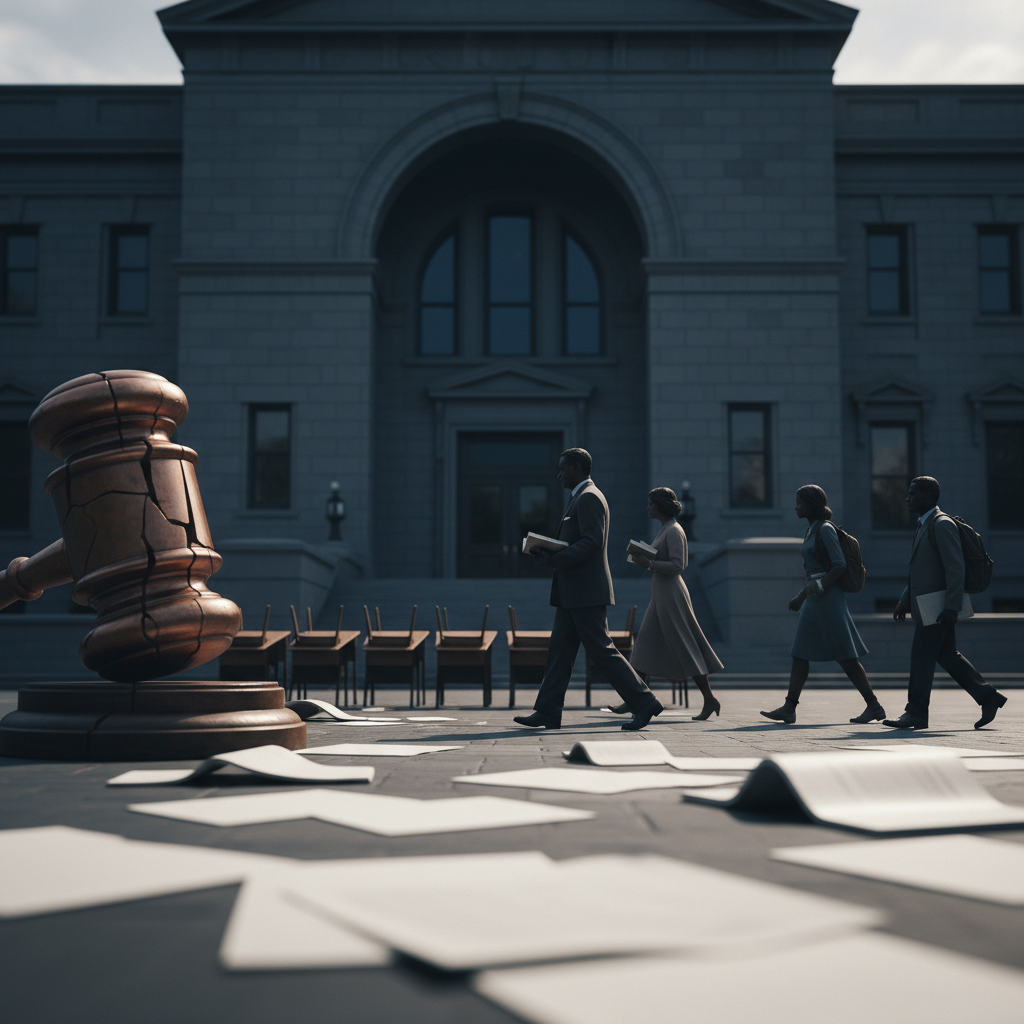
Recent historical retrospectives have revisited two critical moments in the mid-20th and late-20th centuries where local school district actions collided with federal constitutional mandates. These cases illustrate the enduring tension between local democratic will or state-level resistance and the judicial interpretation of the Bill of Rights and the Fourteenth Amendment. By examining specific dates in legal history, these reviews highlight how the U.S. court system serves as the final arbiter in defining the boundaries of religious expression and racial equity within public education.
Reason examines the legacy of the Santa Fe Independent School District's 1995 decision to allow student-led prayer at football games. The publication notes that while a student vote originally authorized these invocations, the legal trajectory shifted significantly when the matter reached the highest court. Reason explains that by 2000, the Supreme Court determined that such organized practices violated the Establishment Clause, effectively overturning the local preference for state-sanctioned religious activity in public spaces.
In a separate historical analysis, Reason recounts the 1958 judicial push to enforce school integration in Arkansas. The piece details how the District Court rejected a petition from the Little Rock School Board that sought to delay desegregation due to public unrest. Reason argues that this specific legal conflict established the groundwork for the landmark ruling in Cooper v. Aaron, which ultimately solidified the principle of federal supremacy in matters of civil rights against state-level opposition.
These retrospectives converge on the theme of federal judicial intervention as a check on local school boards. While one case focuses on the limits of religious expression and the other on the enforcement of integration, both narratives emphasize that the Supreme Court’s interpretation of constitutional law frequently overrides the immediate desires or political pressures faced by local educational authorities.
Detta vet vi
- Supreme Court eventually ruled that student-led football prayers violate the First Amendment's Establishment Clause.
- Historical 1995 student votes in Texas were ultimately overturned by federal judicial interpretation.
- Arkansas courts in 1958 rejected local attempts to delay school integration despite public unrest.
- Federal authority in civil rights was solidified through the landmark Cooper v. Aaron precedent.
Påståenden & källor