editorials·AI-REDIGERAD
South Africa’s Liberal Identity Tested by Rising Xenophobic Sentiment
Recent anti-immigrant protests and the rise of nationalist groups are forcing a re-evaluation of South Africa's status as a beacon of liberal inclusivity.
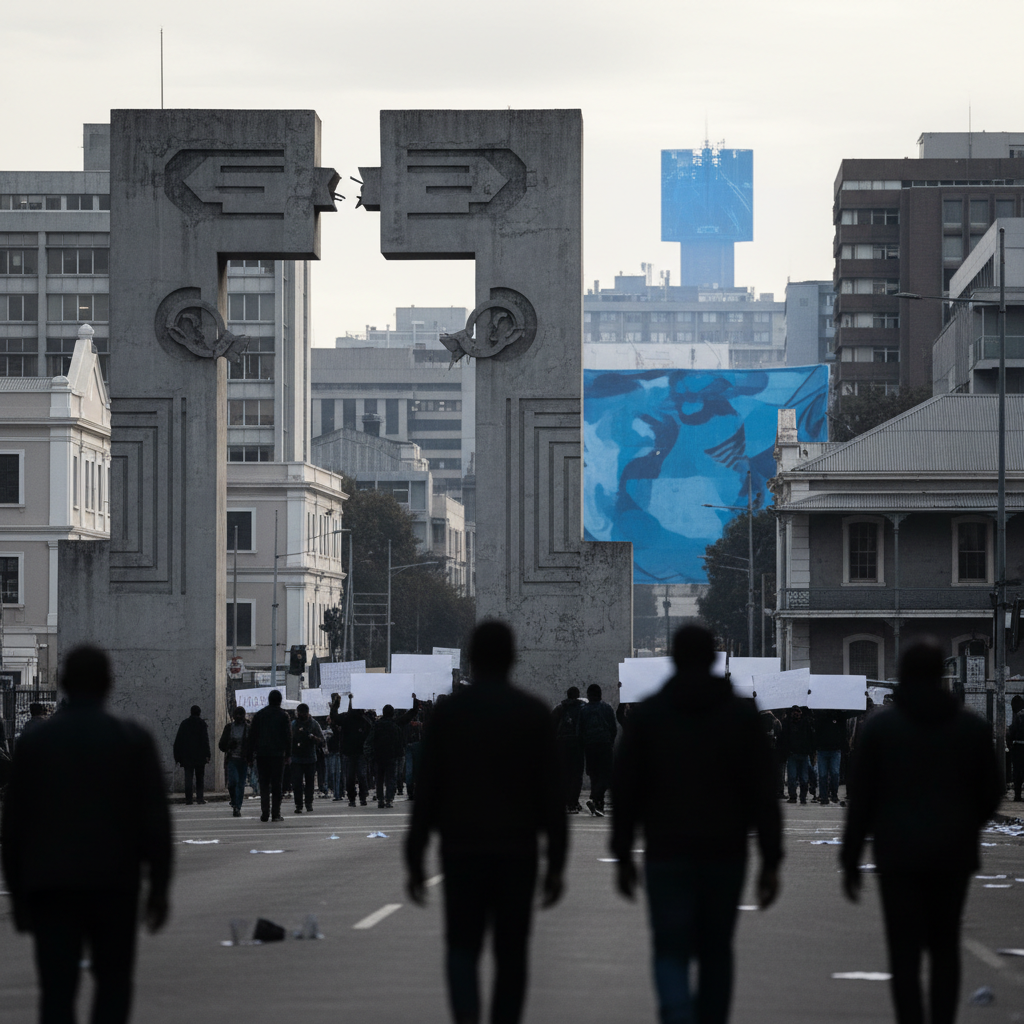
South Africa is currently grappling with a wave of anti-immigrant protests and organized xenophobic actions that are challenging the nation's post-apartheid identity. Once hailed as a beacon of liberal progress and panafrican solidarity, the country is now seeing a surge in nationalist rhetoric and direct action against foreign nationals. Editorial voices are examining whether these events signal a permanent shift toward conservative populism and a failure of leadership to address systemic domestic grievances.
Zanele Mji, writing for The Guardian, argues that the targeting of African foreign nationals by civic groups marks a dangerous transition toward conservative nationalism. Mji observes that these activists are increasingly demanding identity documents from individuals and forcing the closure of foreign-owned businesses. This movement, according to Mji, mirrors a broader global trend where political uncertainty is exploited to fuel xenophobia, ultimately threatening the inclusive values that have defined South Africa’s reputation for decades.
In a separate editorial, The Guardian emphasizes that political leaders are increasingly using migrants as scapegoats for the country's deep-seated structural failures. The editorial board points to the group Operation Dudula, criticizing their efforts to block migrant access to essential public services like healthcare. Rather than addressing high unemployment or the collapse of infrastructure, the board claims that authorities are fueling hostile populism. The piece warns that such rhetoric is a betrayal of Nelson Mandela’s vision of African solidarity and fails to solve the actual economic woes facing the citizenry.
While both perspectives agree that the current unrest is a symptom of political and economic instability, they differ slightly in focus. One emphasizes the loss of the nation's liberal character and its alignment with global nationalist trends, while the other focuses on the specific failure of domestic policy and the moral duty of leaders to cease using foreign nationals as a distraction from government mismanagement.
Detta vet vi
- Xenophobic protests signal a shift from inclusive values to conservative nationalism.
- Politicians are accused of scapegoating migrants for systemic failures like unemployment.
- Groups like Operation Dudula are criticized for blocking migrant access to basics.
- The current unrest reflects a global trend of exploiting instability for xenophobia.
Påståenden & källor