editorials·AI-REDIGERAD
The Impact of Charlie Kirk’s Death on Campus Free Speech
One year after the assassination of activist Charlie Kirk, commentators examine how political violence has stifled campus discourse and fueled deep ideological divisions.
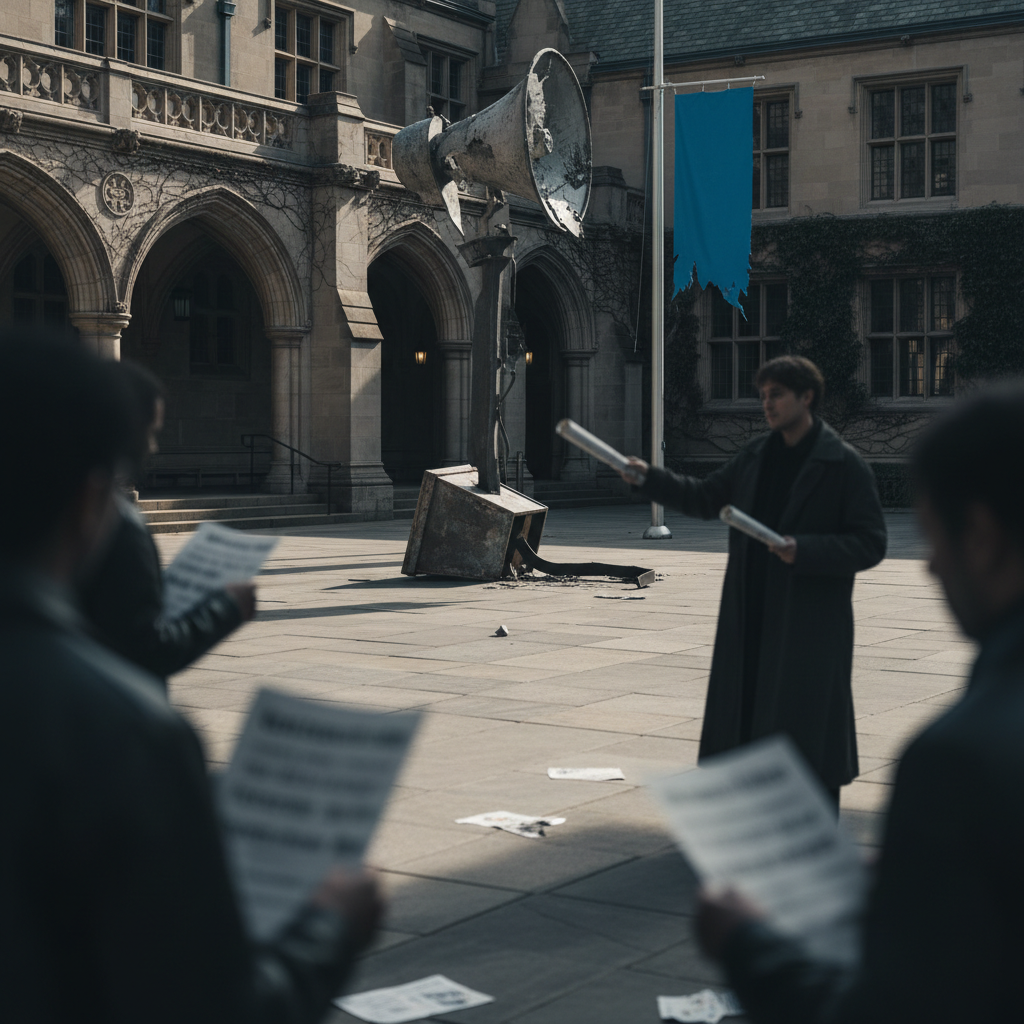
The assassination of Turning Point USA founder Charlie Kirk at Utah Valley University (UVU) has sparked a complex debate regarding the intersection of political violence, public memory, and the vitality of open discourse on campus. One year after the event, the university remains a flashpoint for ideological tension, as the community grapples with the traumatic legacy of the shooting. These discussions highlight a growing concern over how high-profile acts of violence reshape the educational environment and influence the willingness of individuals to engage in the public square.
Reason argues that political violence functions as a corrosive force that fundamentally destroys the culture of open inquiry. Citing data from the Foundation for Individual Rights and Expression (FIRE), the publication notes that UVU’s national free speech ranking plummeted from 71st to 210th following the tragedy. The author points out that self-censorship among the student body rose from 38% to over 50% in a single year, suggesting that the fear of being targeted or blamed for the violence has created a profound discomfort with discussing controversial topics, regardless of a student's personal ideology.
Mother Jones reports that the one-year memorial service served as a microcosm of these deep political divisions. The event attracted a volatile mix of devoted followers, local residents, and student protesters who actively opposed the memorial's presence on campus. Furthermore, the report highlights the emergence of conspiracy theorists at the gathering who used the occasion to challenge official accounts of the shooting. The publication also notes a visible friction between Kirk’s estate and the Trump campaign, evidenced by a lack of high-level administration figures due to a scheduling conflict with a Texas rally.
Ultimately, both perspectives suggest that the impact of the tragedy extends far beyond the legal proceedings of the ongoing trial. While Reason warns that administrative support for free expression is often insufficient to offset the chilling effect of physical danger, Mother Jones illustrates how such events can become magnets for further polarization and misinformation. Together, these accounts portray a campus community struggling to find its voice in the wake of a transformative act of political violence.
Detta vet vi
- UVU’s national free speech ranking plummeted significantly following the activist's murder.
- Student self-censorship increased to over 50% due to fears of targeting or blame.
- The one-year memorial was marked by protests and the presence of conspiracy theorists.
- Administrative defenses of speech have failed to counter the chilling effect of violence.
Påståenden & källor