editorials·AI-REDIGERAD
The Legal Battle Over the White House Ballroom and Judicial Standing
The Supreme Court's decision to permit a White House ballroom project has exposed deep rifts over executive power, congressional oversight, and the technical doctrine of standing.
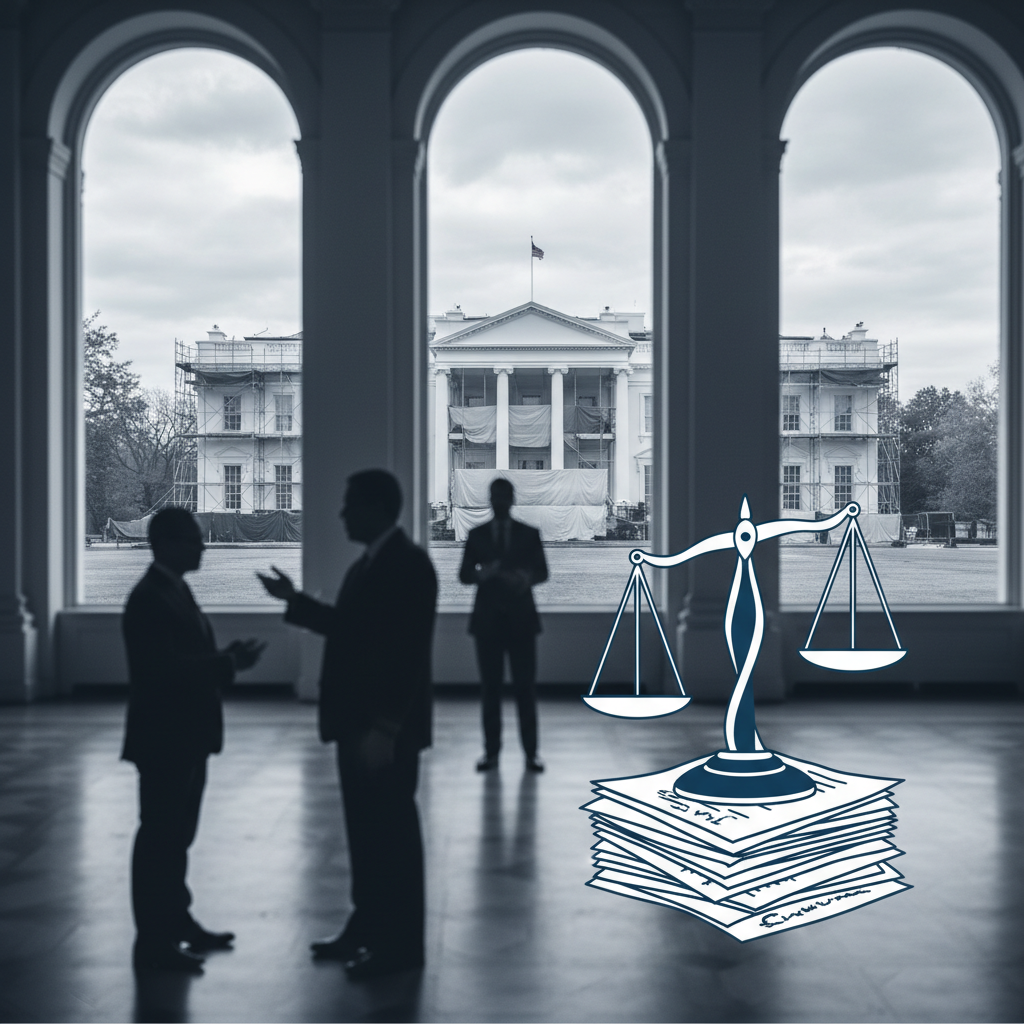
The U.S. Supreme Court’s decision to allow the construction of a controversial White House ballroom complex to proceed has ignited a fierce debate over judicial procedure and executive power. In National Park Service v. National Trust for Historic Preservation, a 5-4 majority stayed a lower court injunction, effectively permitting the demolition of parts of the East Wing despite claims of legislative and environmental violations. While the majority focused on the technical requirements of Article III standing, dissenting voices within and outside the Court have framed the issue as a critical test of the separation of powers.
Much of the conversation centers on the shifting dynamics of the Court’s conservative wing. Reason ([Source) (Source) (Source)](https://reason.com/volokh/2026/08/31/strictly-ballroom-justice-kavanaugh-defeats-chief-justice-roberts/) argues that Justice Brett Kavanaugh has emerged as a champion of procedural rigor, successfully rejecting "aesthetic" injuries as a valid basis for lawsuits. This perspective applauds the Court for overturning precedents that allowed broad standing for offended observers, suggesting the ruling brings necessary discipline to the Establishment Clause and other legal areas. However, Reason also observes that the unusual formatting of Chief Justice John Roberts’s dissent suggests he may have failed in a last-minute attempt to sway his colleagues, particularly Justice Amy Coney Barrett, to his side.
Critics of the project focus on the potential for executive lawlessness. Mother Jones characterizes the Chief Justice’s dissent as hypocritical, arguing that his own past rulings on presidential immunity created the very environment of unchecked executive power he now laments. The outlet further describes these D.C. developments as mismanaged vanity projects funded by diverted public fees to bypass Congressional oversight. Conversely, Reason warns that the administration is undermining the legislature's "power of the purse" by using private donations and maintenance loopholes to avoid seeking formal authorization for federal property changes.
Ultimately, these editorials reveal a judiciary divided between those who prioritize strict limits on who can sue the government and those who fear that such limits allow the executive branch to bypass the law entirely. While some see the ruling as a victory for judicial restraint and national security, others view it as a dangerous precedent that permits the presidency to operate without meaningful legislative or judicial checks.
Detta vet vi
- Justice Kavanaugh is praised for enforcing strict standing requirements and rejecting aesthetic or emotional legal injuries.
- Chief Justice Roberts faced criticism for allegedly bypassing Congress in other D.C. construction projects.
- Critics argue the ballroom project unconstitutionally circumvents the legislature’s power of the purse.
- Some analysts view Roberts’s dissent as a failed attempt to flip the conservative majority.
- Opponents label the project a monument to executive lawlessness and a waste of public funds.
Påståenden & källor
- R
Reason: Strictly Ballroom: Justice Kavanaugh Defeats Chief Justice Roberts
- R
Reason: John Roberts Overruled Trump's Tariffs. But He Can't Seem To Stop Trump's Ballroom.
- R
Reason: Supreme Court Allows White House Ballroom Construction to Go Forward, at Least for Now
- R
Reason: Making Sense Of The Chief Justice's Tango In The Ballroom Case
- M
Mother Jones: It’s Just Too Late for John Roberts to Say He Doesn’t Like Trump’s Ballroom
- R
Reason: CJ Roberts and the Smithsonian Bypass Congress To Build New Latino Museum
- R
Reason: Trump's White House Ballroom Is a Monument to His Lawlessness
- M
Mother Jones: We Toured Trump’s DC Vanity Projects. It’s a Mess.