editorials·AI-REDIGERAD
The Paradox of Dolly Parton: Artifice, Authenticity, and a Divided Legacy
Global editorials examine the late Dolly Parton’s paradoxical legacy, exploring how her "fake" aesthetic and refusal of partisan labels created a rare point of universal cultural unity.
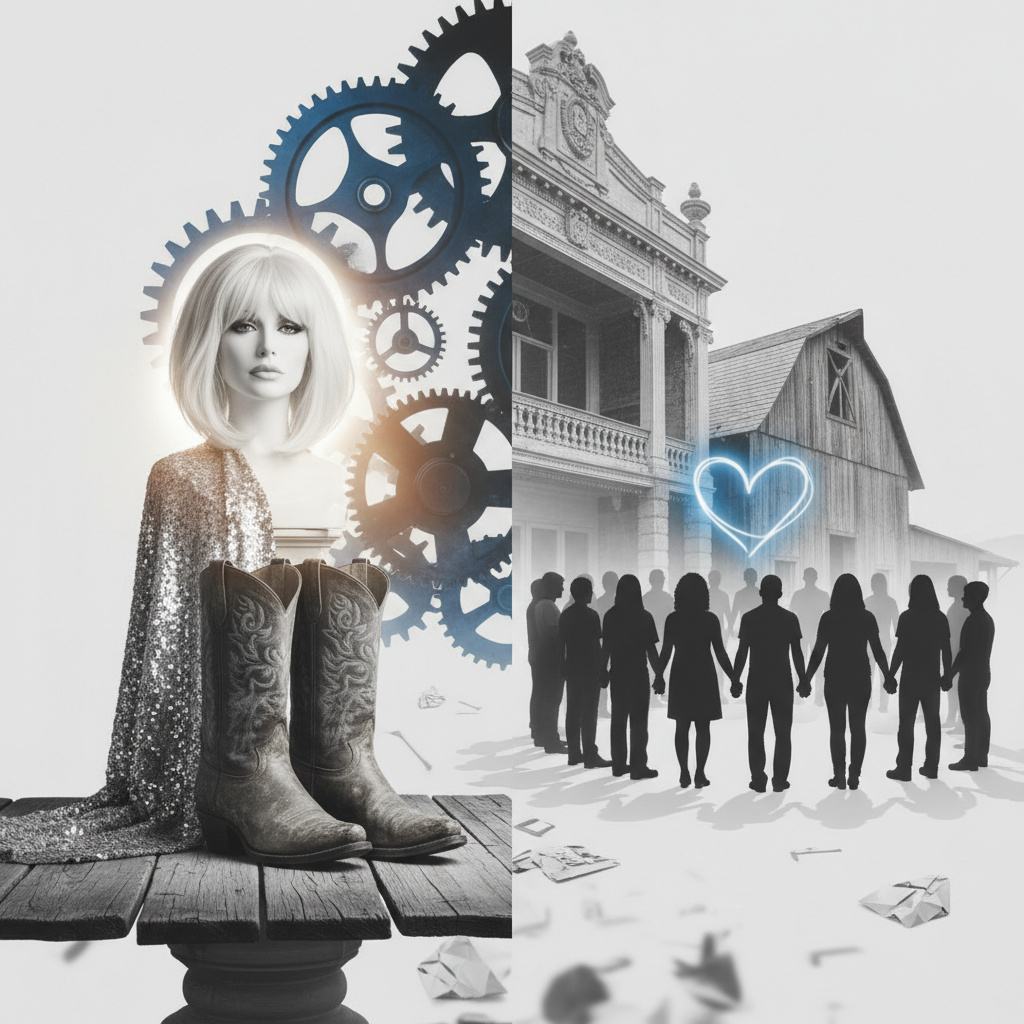
Following the passing of Dolly Parton at age 80, the global editorial conversation has shifted from mere mourning to a deep analysis of her unique cultural mechanics. Analysts are examining how a performer defined by extreme physical artifice—wigs, rhinestones, and cosmetic surgery—managed to become one of the world’s most trusted symbols of authenticity. The discourse centers on her ability to bridge the gap between rural conservatism and urban progressivism through a carefully managed public persona.
The Conversation (Source) argues that Parton’s genius was rooted in her "backwoods Barbie" aesthetic, which used deliberate fakeness to challenge industry expectations of feminine depth. According to this view, her high-camp performance was a savvy tool of agency that allowed her to maintain working-class roots while subverting gender norms, proving that manufactured imagery and genuine songwriting are not mutually exclusive. The Guardian (Source) notes that this persona granted her a singular ability to unite disparate groups, resonating as deeply with the LGBTQ+ community as she did within the MAGA heartlands.
Beyond her aesthetic, Parton’s political neutrality and philanthropic record are being framed as a model for public life. Reason contends that her refusal to engage in performative partisan politics allowed her to embody a libertarian ideal of personal responsibility and individual freedom. The publication suggests her business acumen and unostentatious charity work provided a more satisfying public blueprint than today’s polarized political theater. Mother Jones highlights her concrete contributions, citing her 58-year union membership and her critical million-dollar donation to vaccine research as evidence of a fierce loyalty to the underdog.
However, the intersection of her legacy and current legislation has sparked sharp criticism of political tributes. Mother Jones claims that efforts by Tennessee Governor Bill Lee to rename Nashville’s airport in her honor are hypocritical. The editorial argues that because Parton was a steadfast advocate for drag performers and queer rights, the Governor’s support for restrictive anti-LGBTQ+ laws stands in direct opposition to the values she championed throughout her career.
While some commentators focus on Parton as a triumph of individualist brand management and others see her as a progressive social warrior, a consensus emerges: her legacy is defined by a rare "crossover" quality. Whether viewed through the lens of labor rights, queer iconicity, or libertarian independence, she is remembered for using a highly constructed image to deliver a profoundly human message.
Detta vet vi
- Parton used intentional artifice and camp to redefine authenticity and challenge gender norms in country music.
- Editorials highlight her unique ability to bridge divides between LGBTQ+ activists and conservative rural populations.
- Critics label political tributes as hypocritical when they conflict with Parton’s record of supporting marginalized groups.
- Her philanthropy and business independence are framed as a model for personal responsibility and social care.
Påståenden & källor
- M
Mother Jones: Tennessee’s Governor Loves Dolly—But Not the LGBTQ People She Stood Up For
- T
The Conversation: How the ‘backwoods Barbie’ Dolly Parton turned self-aware artifice into authentic artistry
- T
The Guardian: Goodbye, Dolly Parton: a gay icon whose appeal reached across age, class and politics, and into the Maga heartlands | Emma Brockes
- M
Mother Jones: Here’s to Dolly: Union Member, Vaccine Hero, Literacy Giant, Staunch Gay Ally
- R
Reason: Dolly Parton Knew What She Was Doing