editorials·AI-REDIGERAD
The Supreme Court To Review Proportionality In Asset Forfeitures
The U.S. Supreme Court is set to decide if seizing an expensive aircraft over minor alcohol transport violations constitutes an unconstitutional fine.
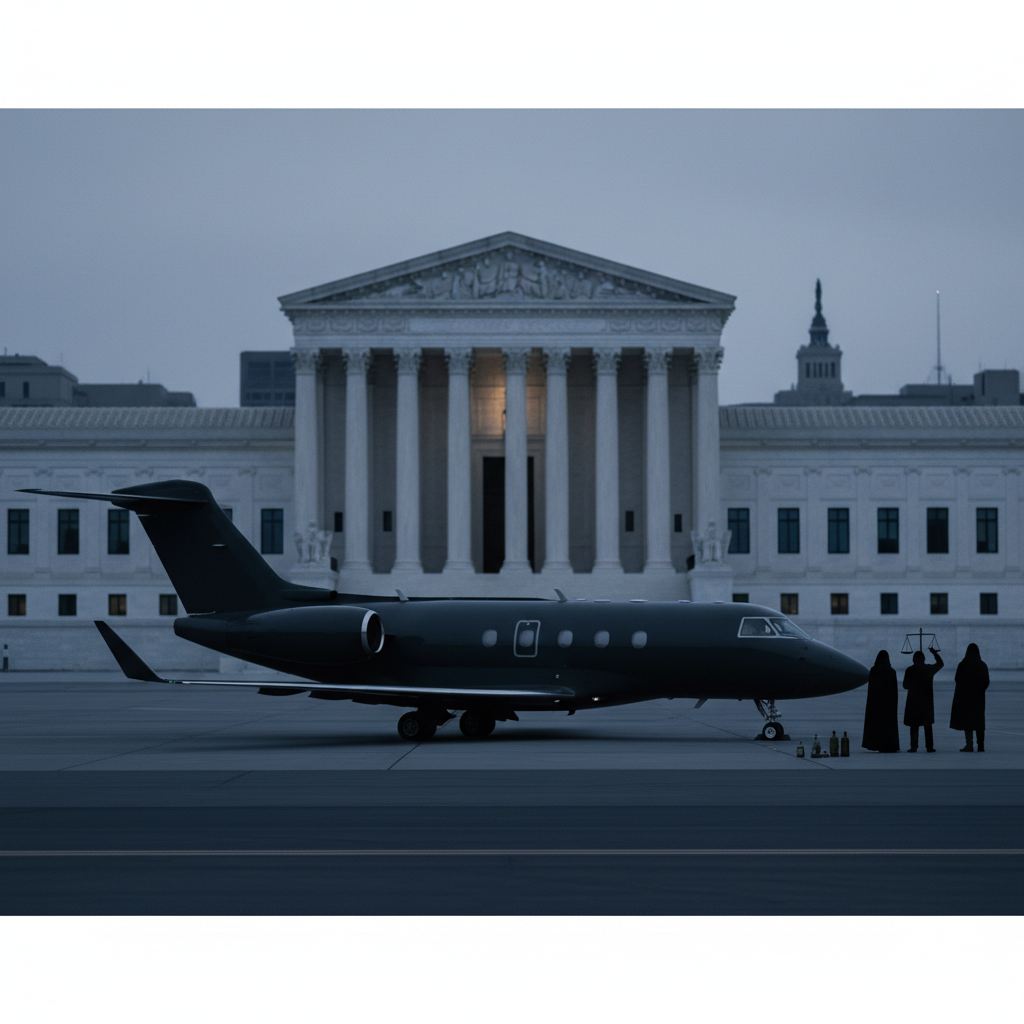
The United States Supreme Court has recently agreed to hear Jouppi v. Alaska, a significant legal challenge concerning the Eighth Amendment’s Excessive Fines Clause. The case focuses on Ken Jouppi, an 82-year-old pilot whose $95,000 aircraft was confiscated by Alaska authorities after he transported a passenger with a small amount of unauthorized beer into a "dry" village. This litigation brings the practice of civil asset forfeiture back into the national spotlight, questioning when government property seizures become unconstitutionally punitive.
Reason argues that the primary issue is the Alaska Supreme Court’s decision to grant broad deference to the legislature. According to this perspective, allowing lawmakers to dictate the severity of forfeitures effectively nullifies constitutional protections. The publication contends that seizing a $95,000 plane is "grossly disproportionate" when compared to the underlying criminal penalty, which in this instance was a merely a $1,500 fine and a three-day jail sentence. The editorial suggests that without a restrictive standard from the Supreme Court, minor infractions will continue to be used as a pretext for massive state-sponsored property confiscations.
Focusing on the specific facts of the case, Reason frames the seizure as a clear instance of government overreach. While Alaska’s state courts justified the forfeiture by citing the social harms caused by alcohol abuse in rural areas, the editorial notes that the pilot's legal defense views this as an unconstitutional financial penalty. The core of the debate, as the publication explains, is whether courts should weigh the specific culpability of an individual or abstract social grievances when determining if a penalty is proportionate.
These editorials converge on the idea that the Supreme Court must clarify how states determine proportionality in asset forfeiture. Both pieces suggest that current standards allow for excessive government power at the expense of individual property rights, with the outcome of this case potentially limiting the state's ability to seize high-value assets for relatively minor offenses.
Detta vet vi
- The case tests whether a $95,000 plane seizure is disproportionate to a $1,500 crime.
- Critics argue excessive judicial deference to legislatures undermines the Eighth Amendment's protections.
- Alaska courts previously justified the seizure by citing the social harms of rural alcohol abuse.
- The ruling could establish much stricter national standards for civil asset forfeiture.
Påståenden & källor