rankings·AI-REDIGERAD
Global Defense Capacity: Comparing Military Personnel by Country
As nations pivot toward high-tech monitoring of remote regions like the Arctic, a look at global military personnel reveals the baseline of human defense capacity.
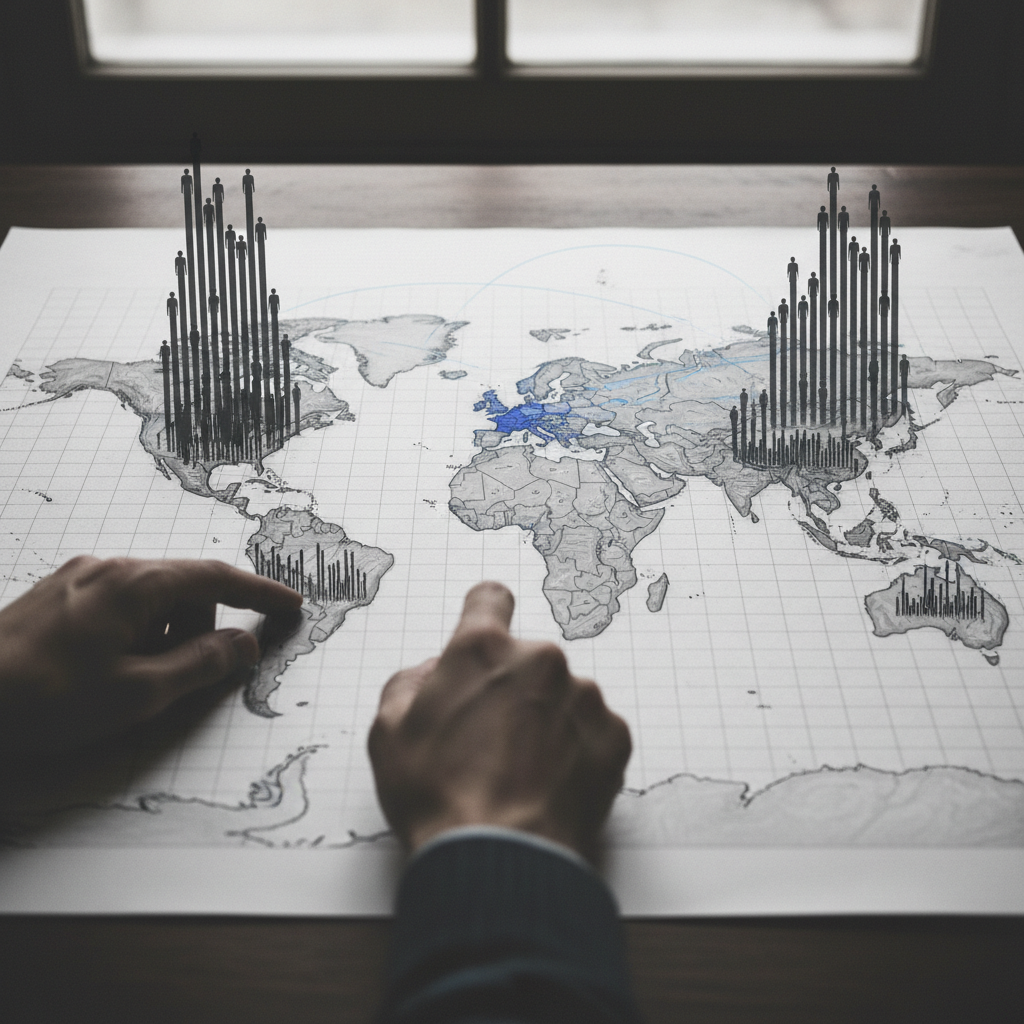
While global defense strategies often focus on hardware—such as the recent push to use drones and digital twins to monitor fragile Arctic infrastructure—the human component remains a primary indicator of a nation’s strategic posture. According to data sourced from Wikipedia, the sheer scale of active military personnel varies drastically, reflecting both regional security concerns and historical legacies.
The data highlights a significant concentration of force in Central and South Asia. Afghanistan, listed with 172,000 personnel, represents the largest force among the top ten entries in this specific alphabetical segment. This figure underscores the intense focus on internal security and stability that has characterized the region’s recent history. In contrast, Azerbaijan (68,200) and Armenia (42,900) maintain substantial forces relative to their geographic size, a direct reflection of long-standing territorial tensions and the need for rapid mobilization capabilities.
At the other end of the spectrum, the ranking illustrates the reality of small-state defense. Antigua and Barbuda, with just 200 personnel, represents the minimum viable force necessary for maritime policing and ceremonial duties, rather than conventional warfare. Meanwhile, Australia’s count of 58,540 demonstrates a shift toward high-tech, personnel-efficient defense. As nations like Australia increasingly invest in remote sensing and unmanned systems to monitor vast territories—including their interests in the Southern Ocean and potential parallels in the Arctic—the quality and technological integration of personnel are becoming as critical as the quantity.
These numbers serve as a baseline for understanding how nations prioritize their spending, moving between the "boots on the ground" model and the "integrated sensor" model required for modern environmental and border monitoring.
Why this is timely
The rise of drone surveillance and 'digital twins' to monitor Arctic infrastructure highlights a shift in defense priorities. Understanding the current size of national militaries is essential for contextualizing how these new technologies will be integrated into traditional command structures.
Detta vet vi
- Afghanistan holds the largest active force among the initial ranked entries at 172,000 personnel.
- Small island nations like Antigua and Barbuda maintain minimal forces of roughly 200 for local security.
- Regional tensions drive higher personnel counts in nations like Azerbaijan and Armenia.
- Modern defense is shifting from pure numbers to a mix of personnel and advanced monitoring tech like drones.
Påståenden & källor
- W
Countries by number of military personnel — full ranked list