rankings·AI-REDIGERAD
Nuclear Arsenals: Mapping the Global Balance of Power
A data-led look at the world's nuclear stockpiles, highlighting the vast disparity between global superpowers and emerging regional arsenals.
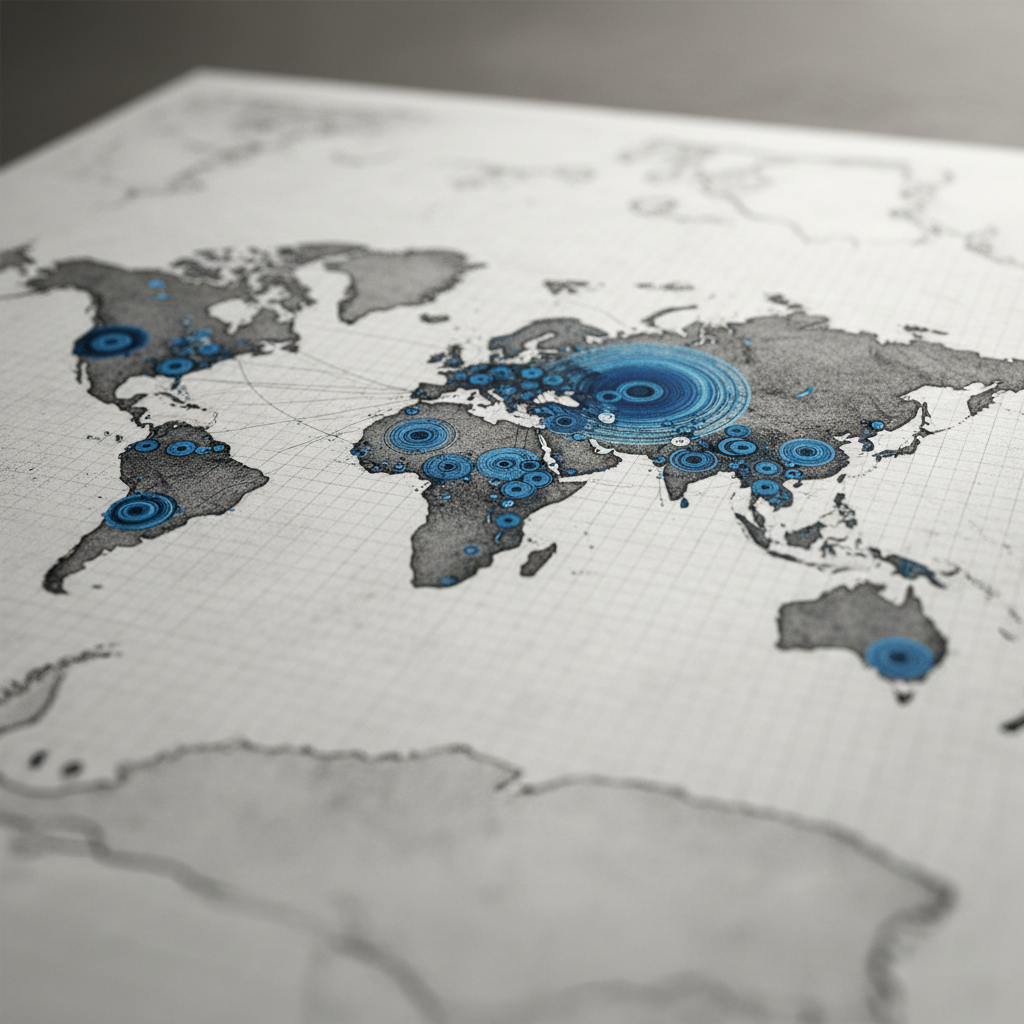
The current geopolitical landscape is defined by a complex balance of power, where nuclear deterrence remains a central, albeit tense, pillar of international relations. Data sourced from Wikipedia reveals a world where nuclear capabilities are highly concentrated among a few veteran powers, while smaller arsenals represent significant regional shifts.
The Duopoly of Power
The most striking takeaway from the data is the sheer scale of the Russian Federation and the United States' stockpiles. With 4,400 and 3,700 warheads respectively, these two nations account for the vast majority of the world’s nuclear inventory. This massive disparity between the "Big Two" and the rest of the world highlights the enduring legacy of the Cold War and the immense responsibility these nations hold in global stability.
The Rise of China
While still far behind the US and Russia, China’s arsenal of 620 warheads marks it as the most significant "second-tier" power. Observers often point to China’s modernization efforts as a primary factor in contemporary geopolitical shifts, as the nation seeks to bolster its "minimum deterrence" posture into a more robust strategic force.
Regional Contenders and Tensions
At the other end of the spectrum, the figures for North Korea (60) and Israel (90) reflect different strategic realities. For North Korea, the arsenal is a tool for regime survival and international leverage. In the Middle East, Israel maintains a policy of deliberate ambiguity regarding its 90 warheads. Meanwhile, the near-parity between India (190) and Pakistan (170) underscores a fragile local balance in South Asia, where every addition to a stockpile is closely monitored by the neighbor.
These numbers serve as a reminder that while the number of nuclear-armed states remains small, the destructive potential concentrated in these few hands continues to dictate the terms of global diplomacy and security.
Why this is timely
Recent geopolitical shifts and heightened international tensions have placed the status of global nuclear deterrents back at the forefront of public and diplomatic discourse.
Detta vet vi
- Russia and the U.S. maintain a massive lead with over 8,000 combined warheads.
- China has emerged as the clear leader of the secondary nuclear powers with 620 warheads.
- South Asian stability is marked by the close parity between India (190) and Pakistan (170).
- Smaller arsenals, such as North Korea's 60 warheads, continue to impact regional security dynamics.
Påståenden & källor
- W
Countries by nuclear weapons — full ranked list