rankings·AI-REDIGERAD
Ranked: The 10 Countries with the Highest Fertility Rates in 2024
Global fertility rates reveal a world divided between rapid growth and demographic decline, with Sub-Saharan Africa leading the highest birth rates.
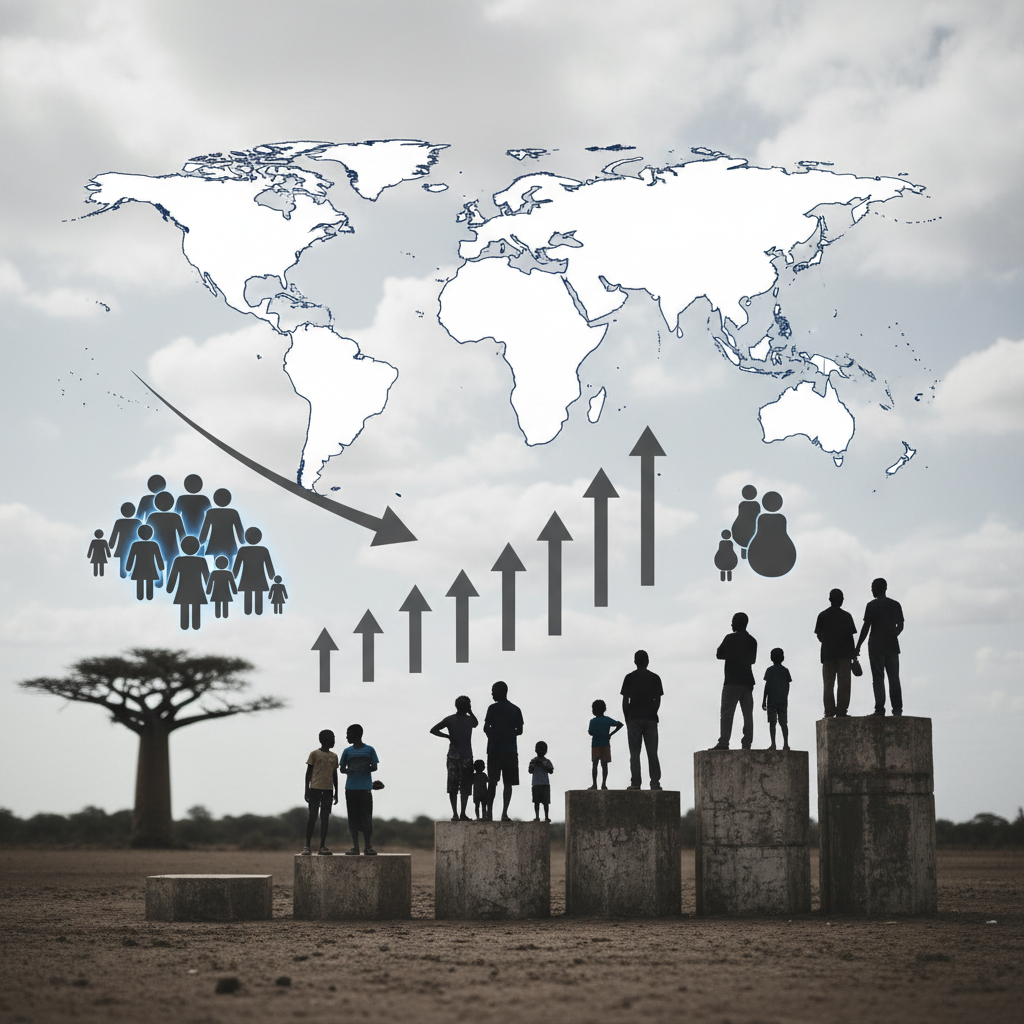
The global demographic landscape is currently defined by a stark divergence. While much of the developed world grapples with sub-replacement fertility, several nations continue to see rapid population growth. According to the Wikipedia dataset on sovereign states and dependencies by total fertility rate (TFR), the highest rates remain concentrated in Sub-Saharan Africa and regions facing significant socio-political transitions.
Chad currently leads the world with a fertility rate of 5.84, followed closely by Somalia (5.81) and the DR Congo (5.80). These figures represent the average number of children a woman is expected to have during her childbearing years. In these nations, high fertility is often linked to agrarian economies, limited access to reproductive healthcare, and cultural norms that prioritize large families.
Interestingly, Afghanistan ranks ninth with a TFR of 4.56, the only non-African nation in the top ten. This underscores the impact of protracted conflict and traditional social structures on demographic output. Conversely, at the lower end of the global spectrum (though not in the top ten), nations like South Korea and various European territories see rates well below 2.0, creating a "demographic cliff" that contrasts sharply with the expansion seen in the Central African Republic (5.69) or Niger (5.64).
These figures do more than count births; they serve as a barometer for national infrastructure needs. In high-fertility countries, the "youth bulge" places immense pressure on education systems and job markets. As global discussions shift toward the roots of the youth mental health crisis, these statistics remind us that the environment into which a child is born—whether one of scarcity in a high-growth nation or one of intense social competition in a low-growth nation—plays a foundational role in shaping the psychological well-being of the next generation.
Why this is timely
As experts debate the roots of the global youth mental health crisis, understanding demographic trends is essential. High fertility rates create unique social pressures and economic demands that directly impact the well-being and future prospects of the world's largest youth populations.
Detta vet vi
- Chad holds the highest total fertility rate in the world at 5.84 children per woman.
- Sub-Saharan Africa accounts for nine of the top ten highest fertility rates globally.
- Afghanistan is the only nation outside of Africa to appear in the top ten with a rate of 4.56.
- Fertility rates are intrinsically linked to a nation's economic structure and access to healthcare.
Påståenden & källor
- W
Countries by fertility rate — full ranked list