rankings·AI-REDIGERAD
The Top 10 Tallest Buildings Defining the Modern Global Skyline
From Dubai to New York, explore the engineering marvels that define modern skylines and reflect the global shift in urban cultural resurgence.
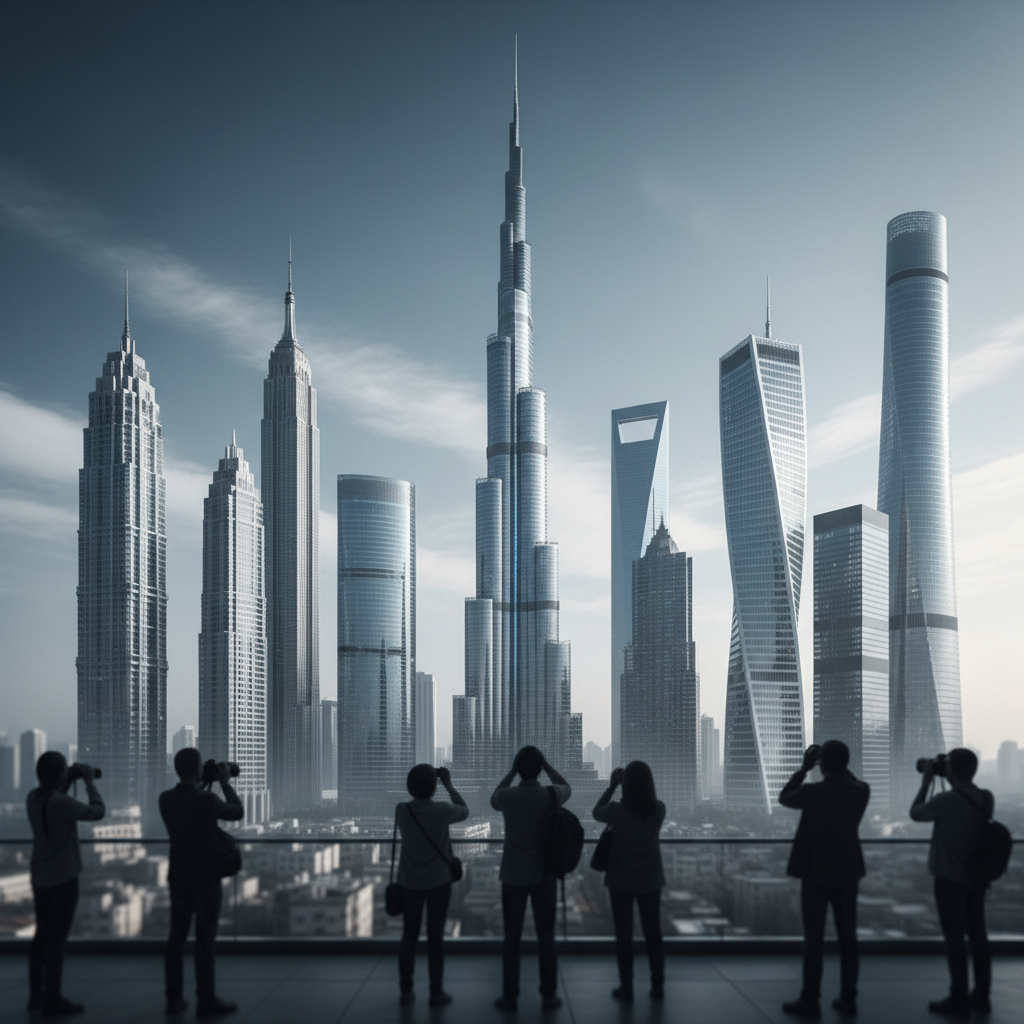
As urban populations swell and the concept of the global city undergoes a cultural resurgence, architectural ambition continues to reach new heights. According to data sourced from Wikipedia’s list of the tallest buildings, the skyline of the 21st century is increasingly defined by East Asian and Middle Eastern dominance, reflecting a shift in the centers of global capital and engineering prowess.
Standing at the pinnacle is the Burj Khalifa in Dubai. With 163 floors above ground (and 2 below), it remains the undisputed champion of the skies. Its presence is a testament to the hyper-urbanization of the United Arab Emirates, serving as both a functional residential and office space and a powerful symbol of national branding.
In contrast, the Merdeka 118 in Kuala Lumpur represents a more recent leap in height, claiming the second spot with 118 floors. Its completion marks a significant moment for Southeast Asian architecture, signaling a competitive drive to define the region's economic recovery through monumental infrastructure.
Further down the list, One World Trade Center in New York City remains the tallest building in the Western Hemisphere. With 104 floors above ground and 5 below, it stands as a poignant reminder of resilience and cultural resurgence following the events of 2001. While it is now surpassed in floor count by several towers in China, such as the Shanghai Tower (128 floors) and the Ping An Finance Centre (115 floors), it retains a unique status as an anchor of global finance in the United States.
Finally, the CITIC Tower in Beijing, rounding out the top ten with 109 floors above ground and a notable 8 floors below ground, illustrates the logistical complexity of modern megastructures. The deep subterranean footprints of these buildings are often as technically impressive as their height, housing the vital utilities and transit links required to support thousands of daily occupants. Together, these structures represent a shift from local landmarks to international icons of urbanization.
Why this is timely
As recent editorials highlight a global cultural resurgence and the evolving nature of urban life, these architectural landmarks serve as the primary symbols of national identity and economic ambition in 2024.
Detta vet vi
- The Burj Khalifa remains the world's tallest building with 163 floors above ground.
- East Asian cities, particularly in China, dominate the top ten for skyscraper density.
- Subterranean levels are vital, with the CITIC Tower featuring 8 floors below ground.
- One World Trade Center remains the tallest structure in the Western Hemisphere.
Påståenden & källor
- W
Tallest buildings in the world — full ranked list