rankings·AI-REDIGERAD
The World's 10 Tallest Buildings: A Map of Global Economic Ambition
As the global economy shifts, the race for vertical supremacy continues to redefine urban horizons from Dubai to Kuala Lumpur.
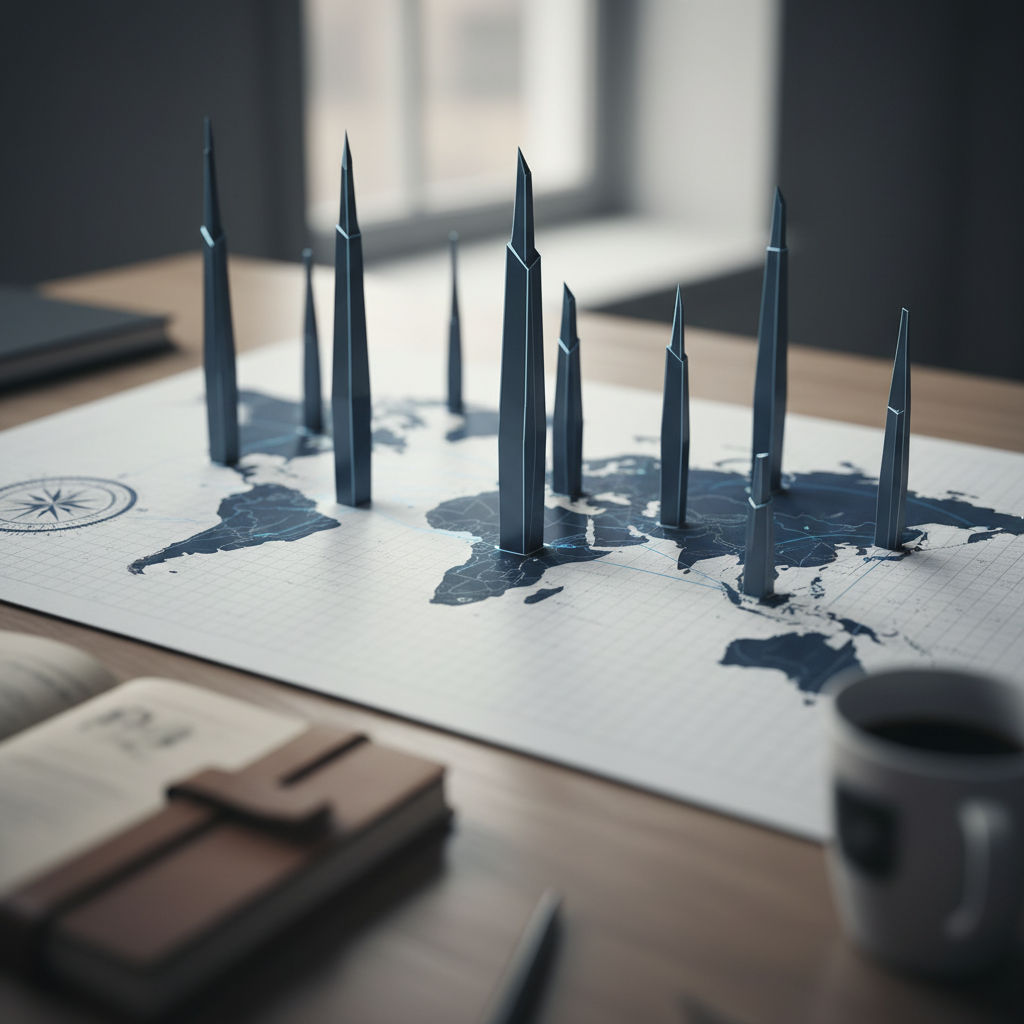
The contemporary skyline is more than just a collection of steel and glass; it is a physical manifestation of a nation’s economic health and geopolitical ambition. According to the Wikipedia List of tallest buildings, the concentration of "supertall" structures has moved decisively toward the Eastern Hemisphere, marking a profound shift in global financial gravity.
At the pinnacle of this list remains the Burj Khalifa in Dubai. With 163 floors above ground, it has held the title of the world’s tallest building since 2010. Its continued dominance reflects the Middle East's long-term strategy to diversify its economy through tourism and luxury real estate, moving beyond a historical reliance on oil.
The rise of Southeast Asia is represented by the Merdeka 118 (Merdeka Maybank Tower) in Kuala Lumpur. Ranking second with 118 floors above ground, it signals Malaysia’s intent to remain a central player in the ASEAN economic bloc. Similarly, China’s presence on this list is overwhelming, with the Shanghai Tower (128 floors) and the Ping An Finance Centre (115 floors) highlighting the rapid urbanization and capital accumulation that characterized the Chinese economy over the last two decades.
North America’s lone representative in the top tier is One World Trade Center in New York City. With 104 floors above ground, it stands not just as a commercial hub, but as a symbol of resilience. While the United States pioneered the skyscraper, the current ranking illustrates that the "race for the sky" is now a competition dominated by the emerging markets of Asia and the Middle East, where high-density vertical development is seen as a primary solution to urban expansion and a badge of international prestige.
Why this is timely
As current editorials discuss rapid societal and economic shifts, the architectural race for global status through supertall buildings remains a key indicator of which nations are successfully projecting economic power and urban growth.
Detta vet vi
- The Burj Khalifa remains the world's tallest building with 163 floors above ground.
- Asian cities now host the majority of the world's top 10 tallest structures.
- One World Trade Center is the only North American building to remain in the top ten.
- The list reflects a significant shift in economic power toward the Middle East and East Asia.
Påståenden & källor
- W
Tallest buildings in the world — full ranked list