rankings·AI-REDIGERAD
The World's Leading Oil Producers: Tracking Global Output in a Shifting Geopolitical Climate
As geopolitical tensions reshape trade policies, we analyze the top global oil producers based on the latest Wikipedia data, led by the United States and OPEC giants.
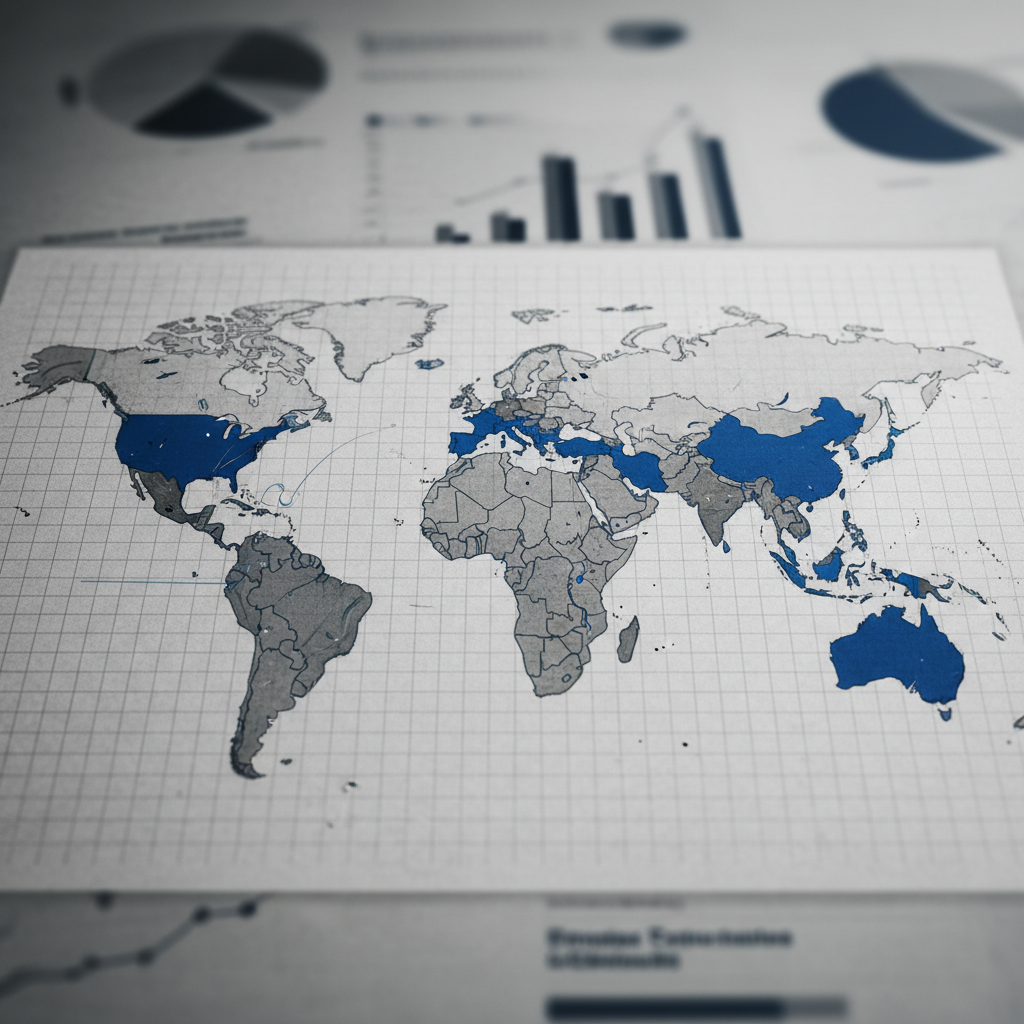
The global energy landscape is currently defined by a high-stakes balance between established petrostates and the continued expansion of North American output. According to data sourced from Wikipedia, the world total oil production stands at approximately 84,533 thousand barrels per day. Within this total, a handful of nations exert disproportionate influence over the global economy and international security.
The United States leads the ranking with a production of 13,246 thousand barrels per day. This position as the world's top producer provides a significant buffer for Western markets against supply shocks, though it remains central to domestic legal and environmental policy debates. Following the U.S. are Saudi Arabia and Russia, producing 10,110 and 10,027 thousand barrels per day, respectively. As the primary leaders of the OPEC and OPEC+ alliances, these two nations possess the unique ability to influence global pricing through coordinated production adjustments.
Among the surprises in the top tier is Brazil, which has ascended to the tenth spot with 3,953 thousand barrels per day. Brazil’s entry into the OPEC+ cooperation framework highlights the growing importance of South American offshore production. Meanwhile, Canada holds a firm grip on the fourth position (5,059 thousand barrels per day), underscoring its role as a stable, long-term provider for the North American market.
The concentration of production among these top ten players illustrates why energy policy remains the cornerstone of modern diplomacy. When production levels shift in these specific regions, the ripple effects are felt instantly in inflation rates and trade balances worldwide.
Why this is timely
Recent editorials highlighting geopolitical instability and economic policy critiques emphasize the critical role of energy independence. Understanding which nations control the majority of oil production is essential to interpreting current shifts in international trade and inflationary pressures.
Detta vet vi
- The United States maintains its position as the world's leading oil producer, surpassing 13 million barrels per day.
- OPEC and OPEC+ members like Saudi Arabia and Russia continue to control a massive share of the world total of 84,533 thousand barrels.
- Brazil has emerged as a major global player, now ranking in the top ten and participating in OPEC+ coordination.
Påståenden & källor
- W
Countries by oil production — full ranked list