rankings·AI-REDIGERAD
The World's Top 10 Busiest Container Ports: A Global Trade Map dominated by Asia
A ranking of the world’s busiest maritime hubs, highlighting the overwhelming dominance of Chinese ports in the global supply chain.
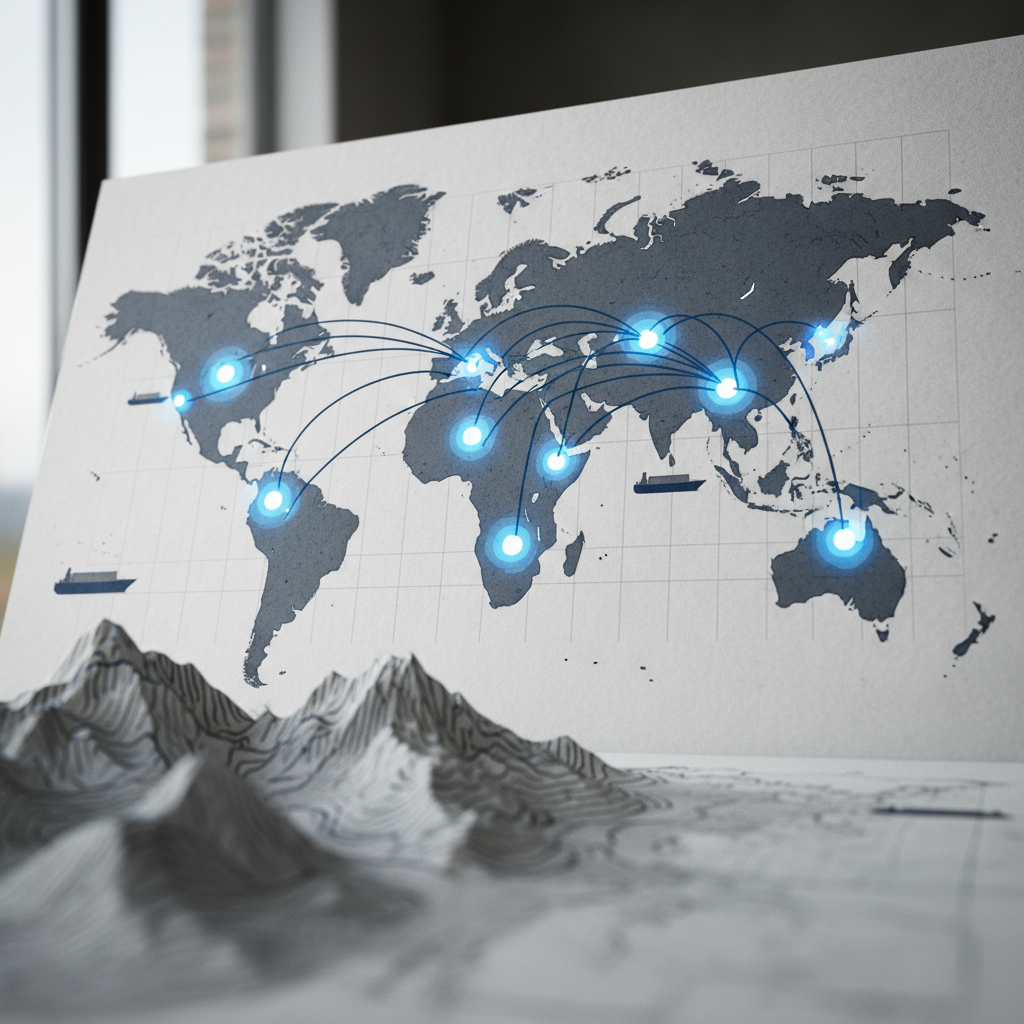
The dominance of East Asia in global logistics is not a new phenomenon, but the scale of its current lead is staggering. Data sourced from Wikipedia's list of busiest container ports reveals that seven of the world’s top ten busiest hubs are located in mainland China. This concentration of maritime activity reflects a global economy heavily reliant on Chinese manufacturing outputs and the efficient movement of twenty-foot equivalent units (TEU).
At the top of the hierarchy sits Shanghai, which has consistently held the number one position globally. Its massive throughput is the primary exit point for the industrial heartland of the Yangtze River Delta. Following closely is Singapore, the only non-Chinese port in the top four, which maintains its relevance as the world's premier transshipment hub, connecting the Indian Ocean to the Pacific.
Further down the list, Busan (ranked 7th) in South Korea and Jebel Ali (ranked 9th) in Dubai represent critical nodes in the global supply chain that operate outside the immediate Chinese sphere. Jebel Ali, in particular, serves as the vital gateway for trade between Europe, Africa, and the rest of Asia. Meanwhile, Malaysia's Port Klang rounds out the top ten, highlighting Southeast Asia's growing role as an alternative manufacturing base.
These rankings illustrate a maritime landscape that is increasingly "unbalanced" in geographical terms. While Western ports in the United States and Europe handle significant volumes, they no longer compete for the top spots in terms of raw TEU throughput. The infrastructure investment seen in ports like Ningbo-Zhoushan (3rd) and Shenzhen (4th) suggests that the center of gravity for global commerce remains firmly anchored in the East.
Why this is timely
As global economists analyze the impact of China’s massive trade surplus and excess savings, the throughput of these ports serves as a physical manifestation of these financial flows. Understanding where goods are moving is essential to understanding the current shift in global trade dynamics and industrial overcapacity.
Detta vet vi
- Shanghai remains the world's busiest container port by a significant margin.
- Seven of the top ten busiest ports are located in mainland China.
- Singapore serves as the primary non-Chinese transshipment hub at rank 2.
- Jebel Ali (Dubai) is the only Middle Eastern port to break the global top ten.
Påståenden & källor
- W
Largest container ports — full ranked list